
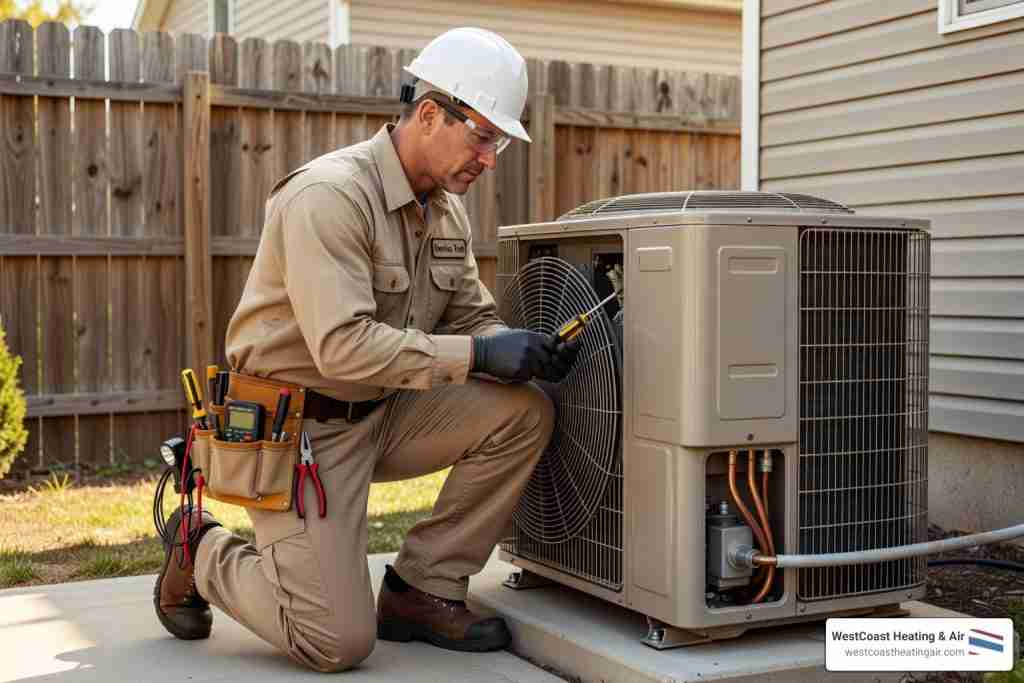
Recognizing the “distress signals” of your HVAC system is the first step in preventing a total breakdown. In our corner of the Pacific Northwest, heat pumps work hard to combat damp winters and humid summers. When they start to struggle, they usually let you know through sound, sight, or smell.

Strange Noises and Mechanical Alarms
A healthy heat pump should hum along relatively quietly. If your unit starts sounding like a dryer full of gravel or a jet engine taking off, it’s time to pay attention.
- Grinding: This often indicates worn-out bearings in the blower motor or the outdoor fan. If you hear this, shut the system down immediately. Running a motor with bad bearings can cause it to seize, potentially leading to a fire or a much more expensive motor replacement.
- Rattling: This might be as simple as a loose panel, but it can also signal that internal components are vibrating lose or that the compressor is starting to fail.
- Squealing: Usually, this points to a belt that is slipping or a motor that is under extreme stress.
- Hissing: This is a classic sign of a refrigerant leak. Since refrigerant is vital for heat transfer, a leak will quickly lead to a loss of heating capacity and can damage the compressor. You can learn more about how to identify a leaking heat pump in Waller to see if your symptoms match.
Performance Red Flags
Beyond noises, pay attention to how the system behaves. Short cycling—where the unit turns on and off every few minutes—is a major red flag. This puts immense strain on the compressor and is often caused by a faulty thermostat, a clogged filter, or low refrigerant levels. If you notice your home feels drafty or the air coming from the vents is lukewarm, your system is likely struggling to keep up with the Tacoma chill. You can find more details on how to identify heat pump problems in Puyallup to help narrow down the cause.
Visual Distress Signals
- Ice Buildup: While a light frost is normal during a defrost cycle, thick ice covering the outdoor coils is a sign of trouble. This usually means the defrost board has failed, the fan is broken, or the refrigerant is low.
- Water Leaks: If you see water pooling around your indoor air handler, your condensate drain is likely clogged. In our humid climate, these drains can grow algae or collect dust, leading to backups that can damage your drywall and floors.
- Error Codes: If your thermostat is flashing a code you’ve never seen, don’t ignore it. It’s the system’s way of telling you a specific component is failing.
When to Prioritize Immediate Service Over Standard Maintenance
Not every hiccup requires a 2:00 AM phone call, but certain situations constitute a true emergency heat pump repair in tacoma, wa.
If the outdoor temperature is dropping toward freezing and you have a complete loss of heat, that is an emergency—especially if you have children, elderly family members, or pets in the home. Similarly, if you smell a burning odor (like electrical ozone or burning plastic) or see sparks coming from the unit, shut off the power at the breaker immediately and call us. These are fire hazards that cannot wait until Monday morning.
Another critical time to call is when your system is stuck in heat pump emergency heat mode. While “Emergency Heat” is a setting on your thermostat, it is meant to be a temporary backup using expensive electric heat strips. If your heat pump can’t maintain temperature without this backup, your utility bills will skyrocket, and it indicates the primary heat pump cycle has failed.
Troubleshooting and Safety Protocols for Homeowners
Before our technician arrives for an emergency heat pump repair in tacoma, wa, there are several safe steps you can take to either resolve the issue or prepare the system for a faster diagnostic.

Safety First
Your safety is the priority. If you suspect an electrical issue, do not open the cabinets of the indoor or outdoor units. Heat pumps contain high-voltage electricity and pressurized refrigerants. Stick to the “external” checks listed below.
Troubleshooting Before Your emergency heat pump repair in tacoma, wa
- Check the Thermostat: It sounds simple, but ensure the thermostat is set to “Heat” and the temperature is set higher than the current room temperature. If the screen is blank, try replacing the batteries.
- Inspect the Circuit Breaker: Check your home’s main electrical panel. If the breaker for the HVAC system has tripped, flip it back once. If it trips again immediately, do not reset it a second time. A recurring trip indicates a short circuit or a grounded compressor, and forcing it can cause a fire.
- The Air Filter Test: A clogged air filter is the number one cause of “no heat” calls. It restricts airflow, causing the system to overheat and shut down. Check your filter; if you can’t see light through it, replace it. Consistent heat pump maintenance services in Puyallup WA can help you stay on top of these simple but vital tasks.
- Clear the Outdoor Unit: Tacoma’s wind and rain can blow leaves, pine needles, and trash against your outdoor unit. Ensure there is at least two feet of clear space around the entire unit to allow for proper airflow.
- Check the Vents: Ensure that furniture, rugs, or curtains aren’t blocking your return or supply vents. Restricted airflow is a silent killer for heat pump efficiency.
If these steps don’t restore your heat, you’ve at least ruled out the “easy fixes,” which helps our technicians get straight to the technical repairs when they arrive. For those looking to understand the full scope of a proper setup, our best Puyallup heat pump installation guide offers great insights into how a system should look and function when it’s healthy.
Common Causes of Heat Pump Failure in the South Sound
Tacoma’s unique geography—nestled between the saltwater of the Commencement Bay and the damp forests of Pierce County—creates specific challenges for HVAC equipment. Understanding why systems fail here can help you prevent future emergencies.
Refrigerant Leaks and Compressor Issues
Refrigerant is the “blood” of your heat pump. Without the correct level, the system cannot move heat from the outside air into your home. In older systems, vibration can cause small cracks in the copper lines. If left unaddressed, low refrigerant causes the compressor to work harder and run hotter, eventually leading to a complete “burnout.” Replacing a compressor is a major job, so catching a leak early during an emergency heat pump repair in tacoma, wa is vital.
Electrical Malfunctions
Between the damp air and occasional power surges during PNW storms, electrical components like capacitors and contactors frequently fail. A capacitor acts like a battery to give the motors a “kick-start.” When it fails, you might hear a humming sound, but the fan or compressor won’t turn on. These are relatively quick repairs for a pro but can completely disable your heating if they fail.
The Reversing Valve
The reversing valve is what makes a heat pump different from an air conditioner; it allows the unit to switch between heating and cooling. If this valve gets stuck, you might find your system blowing cold air in the winter or hot air in the summer.
Mechanical vs. Electrical Failure Symptoms
| Symptom | Likely Cause | Type of Failure |
|---|---|---|
| Humming but no movement | Failed Capacitor | Electrical |
| Grinding or Screeching | Worn Bearings/Motor | Mechanical |
| Frequent Breaker Tripping | Short Circuit/Grounded Compressor | Electrical |
| Iced-over Outdoor Unit | Defrost Board or Sensor Failure | Electrical/Mechanical |
| Lukewarm Air Flow | Low Refrigerant or Clogged Filter | Mechanical/Maintenance |
If your system is older and experiencing frequent failures, it may be time to look at the advantages of upgrading to a high efficiency heat pump. Modern units, such as a 16 SEER heat pump, are designed with better corrosion resistance and more reliable electronics than units built 15 years ago.
Why Prompt emergency heat pump repair in tacoma, wa Prevents System Failure
Ignoring a “small” problem like a strange noise or a slightly iced coil is a recipe for disaster. HVAC systems are interconnected; when one part fails, it puts extra strain on everything else.
- Component Strain: A failing blower motor makes the compressor run longer, shortening its lifespan.
- Secondary Damage: A clogged condensate drain doesn’t just stop the heat; it can cause hundreds of dollars in water damage to your ceilings.
- Indoor Air Quality: A system that isn’t running correctly can’t properly filter the air, leading to a buildup of dust and allergens. In Tacoma’s damp climate, a stagnant system can also encourage mold growth in the ductwork.
Taking quick action and ensuring a professional heat pump installation in Tacoma WA or repair is performed will save you money and stress in the long run.
Frequently Asked Questions about Tacoma Heat Pump Services
What counts as a true heat pump emergency?
A true emergency is any situation that threatens your safety or the integrity of your home. This includes a total loss of heat when outdoor temperatures are below 45 degrees, any smell of smoke or burning, visible sparks, or a major water leak from the indoor unit. If your system is making a sound so loud it can be heard from across the street, that is also an emergency, as it likely indicates a part is about to break and cause further damage.
Can I run my heat pump if it is making a loud grinding noise?
No. You should turn the system off at the thermostat immediately. A grinding noise usually means metal-on-metal contact, often from a failing bearing in a motor. If you continue to run it, the motor can seize or overheat, potentially melting wires or causing a fire. It is much cheaper to replace a motor or a bearing than to replace an entire system damaged by a mechanical seizure.
How does Tacoma’s damp climate affect my heat pump?
Tacoma’s high humidity means there is more moisture in the air for the outdoor unit to deal with. In the winter, this moisture freezes on the coils more quickly, forcing the unit into “defrost mode” more often. If your defrost components aren’t working perfectly, the unit will quickly become encased in ice. Additionally, if you live near the Puget Sound waterfront, the salt air can accelerate the corrosion of the aluminum fins on your outdoor coils, making regular cleaning and professional inspections even more important.
Trust WestCoast Heating & Air for Your Tacoma Emergencies
When your comfort is on the line, you don’t just need a technician; you need a partner who understands the local climate and the specific needs of South Sound homes. At WestCoast Heating & Air, we are a local, family-owned company with over 20 years of experience serving the Tacoma and Puyallup areas.
We pride ourselves on customized system design and customer education. We don’t just want to fix your heat pump; we want to make sure you understand why the failure happened and how to prevent it in the future. Whether you are in University Place, Steilacoom, or right in the heart of Tacoma, our team is ready to provide top-quality service backed by a commitment to the best products in the industry.
If you are facing an HVAC crisis, don’t wait for your toes to freeze. Whether you need a quick fix or a complete heat pump replacement, we are here to help. For more information on getting your system set up correctly from the start, check out our best heat pump installation Tacoma guide.
Ready to get your home back to a cozy temperature? Contact WestCoast Heating & Air today for reliable, expert service you can trust.