
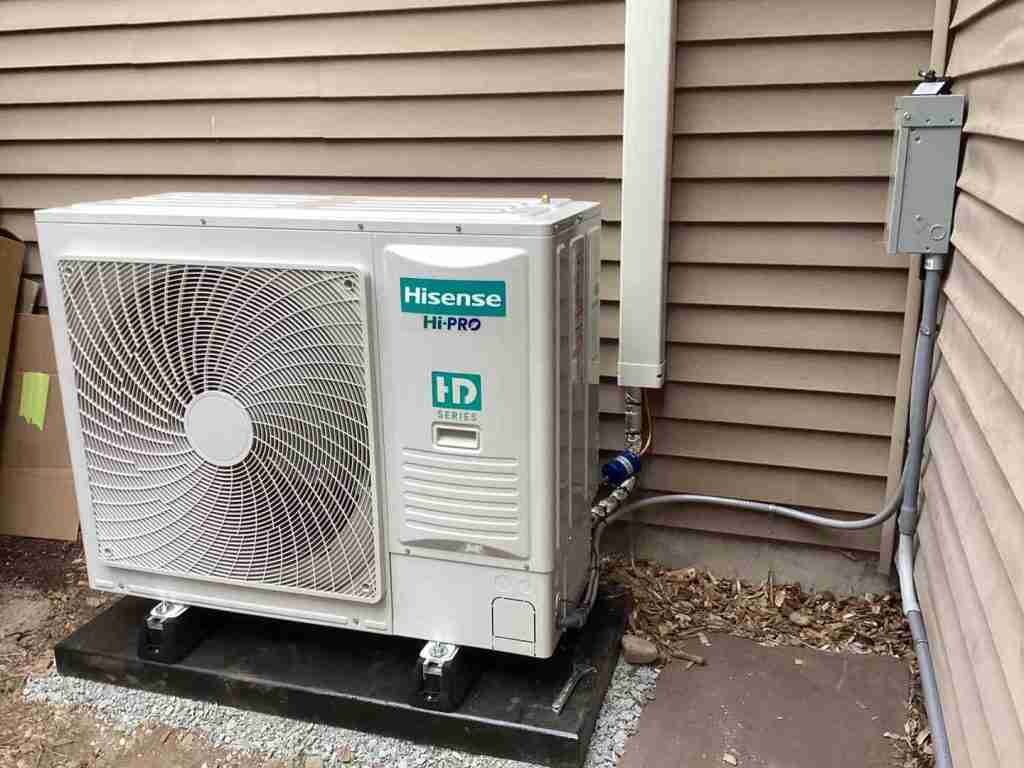
Why Heat Pumps Are Changing Tacoma Homes
Heat pump installation in Tacoma WA has become one of the smartest upgrades homeowners can make for year-round comfort and energy savings. If you’re tired of high heating bills, inconsistent temperatures, or separate systems for heating and cooling, a heat pump offers an efficient all-in-one solution perfectly suited to our Pacific Northwest climate. With Tacoma’s mild winters and moderate summers, heat pumps can reduce your electricity use by 25-50% compared to traditional electric resistance heating while keeping your home comfortable in every season.
Quick Answer: Heat pump installation involves a professional assessment of your home, selecting the right system type (ducted or ductless), proper sizing based on your space, expert installation by certified technicians, and final testing to ensure optimal performance. Tacoma residents can take advantage of local rebates from Tacoma Power and federal tax credits to help offset installation costs.
Whether you’re looking to upgrade your entire HVAC system or exploring options for more efficient heating and cooling, understanding the installation process helps you make the best choice. Ready to get started? Contact us to schedule your free consultation.
The beauty of modern heat pumps is their versatility. They work by transferring heat rather than generating it, which makes them incredibly efficient. In winter, they extract warmth from outdoor air and move it inside. In summer, the process reverses to cool your home. This means you get consistent comfort without the temperature spikes and cold spots common with older systems.
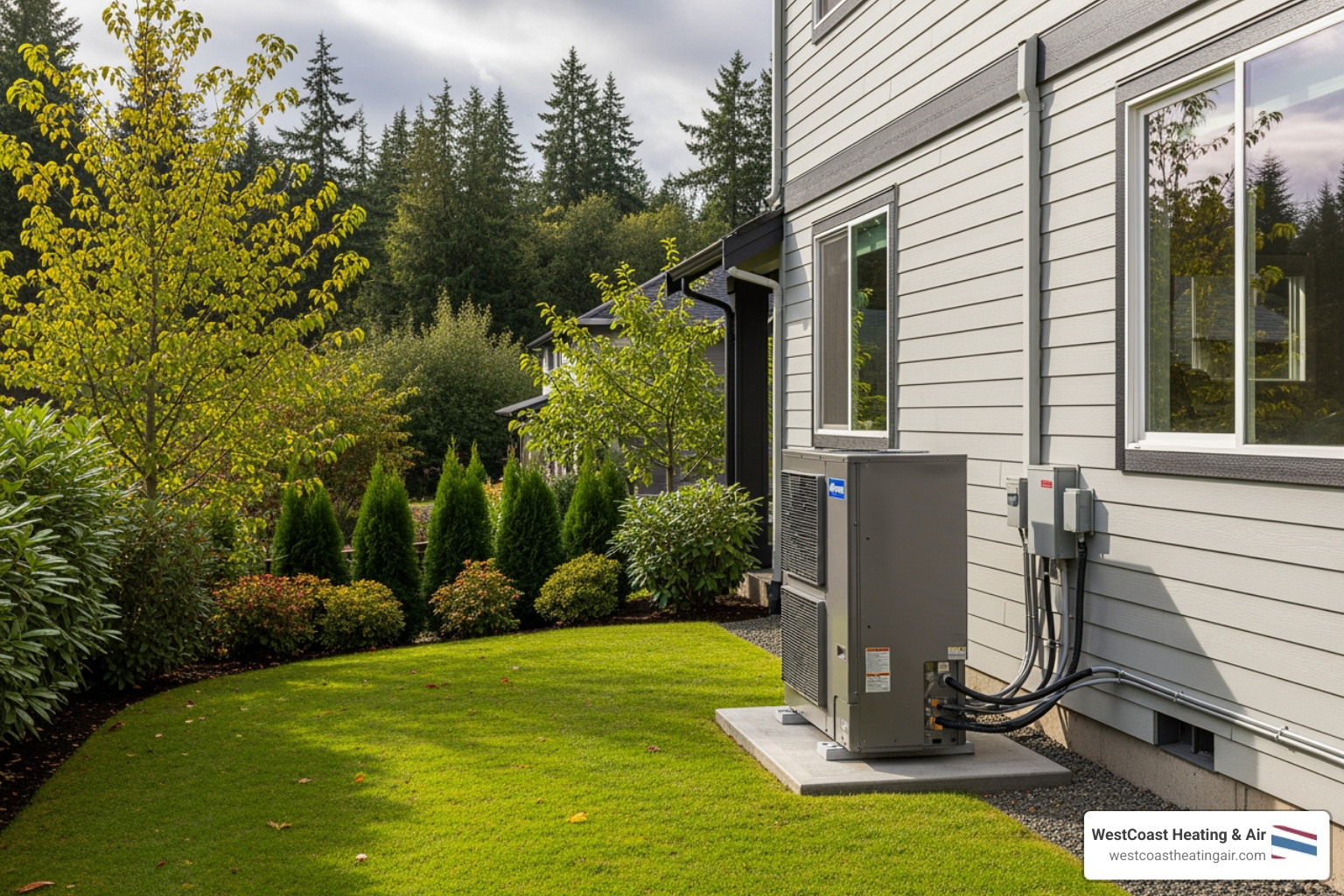
Why a Heat Pump is the Smart Choice for Your Tacoma Home
Choosing a heat pump for your home in Tacoma, WA, is more than just an upgrade; it’s an investment in superior comfort, significant energy savings, and a healthier living environment. We’ve seen how these systems transform homes, providing consistent, reliable heating and cooling throughout the year.
The primary appeal of heat pumps lies in their incredible energy efficiency. They don’t burn fuel to create heat; instead, they simply move existing heat from one place to another. This fundamental difference means they can reduce your electricity use for heating by a remarkable 25-50% compared to conventional electric resistance heating like furnaces or baseboard units. Imagine cutting your energy bills while enjoying a more comfortable home!
Beyond the financial savings, heat pumps offer unparalleled comfort. They deliver consistent temperatures, eliminating the hot and cold spots often found with traditional systems. This means a cozy warmth in winter and refreshing cool air in summer, all from a single, quiet unit. Our clients frequently tell us how much they appreciate the steady comfort a heat pump provides, making their homes true sanctuaries regardless of the weather outside.
Another significant benefit is improved indoor air quality. Many modern heat pump systems come equipped with advanced filtration, helping to remove dust, allergens, and other airborne pollutants from your home. This is particularly beneficial for families with allergies or respiratory concerns, allowing everyone to breathe easier and feel healthier. Hospitals even use heat pumps for their air quality benefits, highlighting their effectiveness in circulating healthy, clean air.
Finally, by using electricity to transfer heat, heat pumps significantly reduce your carbon footprint, making them an environmentally friendly choice. This aligns with a growing desire among homeowners in our region to make sustainable choices without sacrificing comfort. For a deeper dive into the advantages, explore our guide on the Advantages of Upgrading to a High-Efficiency Heat Pump.
How Heat Pumps Excel in the Pacific Northwest
Tacoma’s unique climate, characterized by mild but sometimes unpredictable conditions, makes it an ideal location for heat pump technology. We experience cool, wet winters with temperatures rarely dipping far below freezing, and moderate summers that call for efficient cooling and dehumidification. This is precisely where heat pumps shine.
Heat pumps are most effective in regions where winter lows remain above approximately 40°F. While their efficiency can start to drop below that point, and fall sharply near 25°F, modern heat pumps are specifically designed to perform well even in cooler temperatures. For those occasional deep freezes, many systems can be paired with supplemental heating sources or have built-in auxiliary heating to ensure your comfort never wavers.
During our mild summers, heat pumps reverse their operation to act as highly efficient air conditioners. Not only do they cool your home, but they also provide excellent dehumidification, which is a big plus in our often-damp climate. This dual functionality means you get year-round climate control from a single system, simplifying your home’s HVAC needs.
Compared to conventional electric resistance heating, heat pumps are a far superior choice for our region. They can reduce your electricity use by up to 50% for heating. This translates into substantial savings on utility bills, especially for homes that previously relied on electric furnaces or baseboard heaters. Given our cool and wet climate for much of the year, this efficiency can make a huge difference in your household budget.
Understanding Your Heat Pump Options
Before diving into heat pump installation in Tacoma WA, it’s crucial to understand how these ingenious systems work and the different types available. At its core, a heat pump is a device that transfers heat from one place to another. Think of it like a refrigerator: it doesn’t create cold, it simply moves heat out of the fridge compartment. Similarly, a heat pump doesn’t generate heat; it moves existing thermal energy.
In winter, a heat pump extracts latent heat from the outdoor air (even cold air contains heat!) and transfers it indoors. It uses a refrigerant that cycles through evaporation and condensation processes. The outdoor coil absorbs heat, causing the refrigerant to evaporate. This warmed refrigerant then moves to the indoor coil, where it condenses and releases heat into your home. In summer, this process reverses: the indoor coil absorbs heat from your home, and the outdoor coil releases it outside, effectively cooling your living space. This heat transfer mechanism is what makes them so much more energy-efficient than systems that burn fuel to create heat.
There are generally four main types of heat pumps: air source, water source, geothermal, and ground source. For residential applications in Tacoma and the surrounding areas we serve, air source heat pumps are the most common and practical choice. These systems extract heat from the air, making them highly adaptable for most homes. To explore all your high-efficiency heating options, check out our guide on The Best High-Efficiency Heating Options for Your Home.
Ducted vs. Ductless Systems
When considering heat pump installation in Tacoma WA, one of the first decisions you’ll face is whether to opt for a ducted or ductless system. Both offer excellent efficiency and comfort, but they cater to different home configurations and needs.
Ducted Heat Pumps (Central Heat Pumps): These systems are designed for homes with existing ductwork or for new constructions where ductwork can be easily installed. A central heat pump typically consists of an outdoor unit (compressor and coil) and an indoor unit (often integrated with a furnace or air handler) that distributes conditioned air throughout your home via the duct system. If you already have a furnace and ductwork, converting to a central heat pump can be a seamless transition, utilizing your existing infrastructure. This provides whole-home heating and cooling from a single, centrally controlled system.
Ductless Heat Pumps (Mini-Splits): As the name suggests, ductless systems do not require extensive ductwork. They consist of an outdoor unit connected to one or more indoor air-handling units, which are typically mounted on walls or ceilings in individual rooms or zones. Each indoor unit can be controlled independently, offering incredible flexibility for zoned comfort. This is an ideal solution for older homes in Tacoma, Puyallup, or Steilacoom that lack ductwork, additions, or for homeowners who want to heat and cool specific areas without affecting the entire house. Ductless systems are also less invasive to install, making them a popular choice for their versatility and efficiency. You can learn more about this flexible option on our Ductless Heating and Cooling page and find the Ductless Heating Benefits for the Modern Home.
Key Factors for Choosing Your System
Selecting the right heat pump system for your home requires careful consideration of several factors. Our goal is always to design a customized system that perfectly matches your home’s unique characteristics and your family’s comfort needs.
Home Size and Layout: The square footage of your home and its floor plan will dictate the capacity (tonnage) of the heat pump required. A system that’s too small won’t adequately heat or cool, while one that’s too large will cycle on and off too frequently, leading to inefficiency and premature wear. For homes with multiple levels or distinct zones, a multi-zone ducted system or multiple ductless units might be appropriate.
Insulation Levels: The quality of your home’s insulation, windows, and overall air sealing significantly impacts how much heating and cooling capacity you need. A well-insulated home will require a smaller, more efficient system. We’ll always conduct a thorough assessment to account for these crucial details.
SEER and HSPF Ratings Explained: These acronyms are your guides to energy efficiency.
- SEER (Seasonal Energy Efficiency Ratio): This rating measures the cooling efficiency of a heat pump. A higher SEER number indicates greater efficiency, meaning the system uses less electricity to produce the same amount of cooling.
- HSPF (Heating Seasonal Performance Factor): This rating measures the heating efficiency of a heat pump. Again, a higher HSPF number signifies better heating efficiency and lower energy consumption during colder months.
When looking at new heat pumps, especially those qualifying for rebates and incentives, you’ll often see minimum requirements like an HSPF of 9.0 (or HSPF2 of 7.5) and a SEER of 15 (or SEER2 of 14.3). These standards ensure you’re investing in a truly high-efficiency unit that will deliver significant long-term savings.
Efficiency Standards: To qualify for many of the attractive rebates and tax credits, heat pumps must meet specific high-efficiency standards and often require AHRI (Air-Conditioning, Heating, and Refrigeration Institute) certification. We stay up-to-date on all these requirements to ensure the systems we install not only deliver optimal performance but also maximize your eligibility for available savings.
The Guide to Heat Pump Installation in Tacoma WA
Starting on a new heat pump installation in Tacoma WA is an exciting step towards a more comfortable and energy-efficient home. The process, when handled by experienced professionals like us, is designed to be seamless and stress-free. From the initial assessment to the final walkthrough, we prioritize clear communication and meticulous workmanship.
Our installation process begins with a comprehensive home assessment. This isn’t just a quick look; it’s a detailed evaluation of your home’s unique characteristics, including its size, layout, existing ductwork (if any), insulation levels, and your family’s specific heating and cooling needs. This assessment allows us to accurately size the system and recommend the best type of heat pump – whether ducted or ductless – for optimal performance and efficiency. We believe in customized system design, ensuring your new heat pump is perfectly custom to your space.
Following the assessment, we’ll guide you through the system selection process, explaining the features and benefits of different models and ensuring you understand the efficiency ratings and potential energy savings. Once your ideal system is chosen, our certified technicians will carefully plan and execute the installation. We adhere to the highest industry standards and local building codes, ensuring every component is installed correctly and safely.
The installation culminates in a final inspection and testing phase. We don’t just turn it on and leave; we carefully test the system to ensure it’s operating at peak efficiency, delivering the promised comfort and performance. We’ll also provide a thorough homeowner walkthrough, explaining how to operate your new heat pump, program your thermostat, and perform basic maintenance tasks to keep it running smoothly. For a general overview of what to expect during a major HVAC upgrade, you might find our article on What to Expect During an HVAC Replacement helpful.
The Step-by-Step Process for a professional heat pump installation in Tacoma WA
A professional heat pump installation in Tacoma WA is a multi-step process that ensures your new system operates efficiently and reliably for years to come. Here’s what you can expect when you choose us for your installation:
Initial Consultation and Home Assessment: This is where we get to know your home and your needs. We’ll visit your property in Tacoma, Puyallup, or any of our service areas, discuss your comfort preferences, energy goals, and budget. Our expert technicians will conduct a detailed load calculation to determine the precise heating and cooling requirements for your home, considering factors like square footage, insulation, windows, and existing ductwork.
System Design and Selection: Based on our assessment, we’ll present you with custom options for heat pump systems, explaining the differences between ducted and ductless models, efficiency ratings (SEER, HSPF), and any advanced features. We’ll help you select the best unit that maximizes comfort and energy savings for your specific home.
Site Preparation: Before installation day, we’ll advise you on any preparations needed. This typically involves ensuring the area around both the indoor and outdoor unit locations is clear for easy access. Removing any obstacles or debris near the installation site and ensuring a clear path for our technicians to work safely is always appreciated. We handle the careful removal and disposal of old units if you’re replacing an existing system.
Installation of Indoor and Outdoor Units: Our certified technicians will expertly install the outdoor compressor unit on a stable pad and the indoor air handler or ductless mini-split units. This involves securing the units, making necessary refrigerant line connections, and ensuring proper airflow.
Electrical Work and Connections: Heat pump installation requires specific electrical connections. Our team ensures all wiring is up to code and safely connected to your home’s electrical system. In some cases, minor electrical upgrades might be necessary to accommodate the new system, which we’ll discuss with you upfront.
Refrigerant Line Connection and Evacuation: The refrigerant lines, which carry heat between the indoor and outdoor units, are carefully connected. Crucially, the system is then “evacuated” to remove any air and moisture, which is vital for the heat pump’s efficiency and longevity.
System Commissioning and Testing: Once all components are installed, we carefully commission the system. This involves charging it with the correct amount of refrigerant and running comprehensive tests to verify that it’s operating correctly, efficiently, and quietly. We check for proper airflow, temperature differentials, and overall system performance.
Homeowner Walkthrough and Education: We’ll walk you through your new system, demonstrating how to use your thermostat or remote controls, explaining its features, and providing tips for optimal operation and basic maintenance. We want you to feel confident and comfortable with your new heat pump from day one.
Maximizing Savings: Rebates and Incentives for Tacoma Residents
Investing in heat pump installation in Tacoma WA is made even more attractive thanks to a variety of rebates, tax credits, and incentives available to homeowners. These programs are designed to encourage energy efficiency and help offset the upfront cost of your new system. We’re here to help you steer these opportunities and ensure you claim every incentive you’re eligible for.
Tacoma Power Incentives: Tacoma Power offers fantastic programs for their residential customers to make energy-efficient upgrades more accessible. These can include rebates for installing qualifying ductless and central heat pumps, as well as attractive financing options like low-interest or deferred loans for eligible homeowners. To qualify for these Tacoma Power incentives, the installation must be performed by a Tacoma Power Participating Contractor (which we are!) and the heat pump must meet specific high-efficiency standards (AHRI certified with minimum HSPF 9.0/HSPF2 7.5 and SEER 15/SEER2 14.3).
Federal Tax Credits: The federal government provides significant tax credits for the installation of qualified residential heat pumps as part of the Inflation Reduction Act. This incentive, available annually until 2033, can lead to substantial savings on your federal taxes.
HEAR Program (Home Electrification Appliance Rebate): The City of Tacoma, in partnership with Tacoma Power Utilities, offers additional rebates through the HEAR program. This program is designed to support the transition to electric appliances, including heat pumps, and can provide substantial savings, especially for income-qualified households.
We understand that navigating these programs can feel complex. Our team is well-versed in the requirements for these local and federal incentives and will assist you in identifying eligible systems and completing the necessary paperwork to maximize your savings. For more information on finding reliable services that can help with these incentives, you can refer to our page on Finding Reliable Heating and Air Services in Puyallup.
Maintaining Your Investment: Lifespan, Maintenance, and Warranties
After your heat pump installation in Tacoma WA, you’ll want to ensure your new system continues to provide reliable comfort and efficiency for many years. Just like any major home appliance, proper maintenance and understanding its lifespan and warranties are key to protecting your investment.
Most modern residential heat pumps are built to last. With proper routine maintenance, you can expect your heat pump to serve your home for between 10 and 15 years. A well-installed and well-maintained heat pump can even reach an average lifespan of 12 to 20 years. Consistent care not only extends the life of your unit but also ensures it operates at peak efficiency, saving you money on energy bills and preventing costly breakdowns.
Routine maintenance is paramount. Neglecting your heat pump can lead to decreased efficiency, more frequent repairs, and a shortened lifespan. Think of it like a car: regular oil changes and tune-ups keep it running smoothly. The same applies to your heat pump, which works year-round to keep your home comfortable.
Warranties provide crucial peace of mind for your heat pump investment.
- Manufacturer Warranties: These typically cover parts for a specific period, often ranging from 5 to 10 years or even more for major components like the compressor. The specific terms can vary widely by manufacturer and model.
- Labor Warranties: We also provide a labor and workmanship warranty for our installations. We may offer extended labor warranties to further protect your investment. Always clarify the specifics of both manufacturer and labor warranties before installation.
Understanding when it’s time to consider an upgrade is also important. Our article on Signs It’s Time to Upgrade Your HVAC System offers valuable insights into recognizing when your current system might be nearing the end of its efficient life.
Key Maintenance Tasks for Your heat pump installation in Tacoma WA
To ensure your heat pump runs efficiently and lasts as long as possible, a few key maintenance tasks are essential. Some you can handle yourself, while others require professional expertise.
Regular Filter Changes: This is arguably the most important and easiest task you can do. Your heat pump’s air filter traps dust, pollen, and other airborne particles. A dirty filter restricts airflow, forcing your system to work harder, which wastes energy and can lead to mechanical issues. We recommend checking your filter monthly and changing or cleaning it every one to three months, depending on usage and household conditions (e.g., pets, allergies).
Cleaning Outdoor Coils: The outdoor unit’s coils are responsible for exchanging heat with the outside air. Over time, they can become covered in dirt, leaves, grass clippings, and other debris. Keep the area around your outdoor unit clear of vegetation and debris, and gently clean the coils annually with a soft brush or hose. Blocked coils reduce efficiency and can overwork the compressor.
Annual Professional Tune-ups: Just like you take your car in for a check-up, your heat pump benefits greatly from an annual professional tune-up. Our certified technicians will perform a comprehensive inspection, including:
- Checking refrigerant levels and pressure.
- Cleaning coils (both indoor and outdoor).
- Inspecting electrical connections and components.
- Lubricating moving parts.
- Checking the thermostat calibration.
- Verifying proper airflow and drainage.
- Identifying any potential problems before they lead to major service failure.
Due to their dual heating and cooling functions, some experts even recommend twice-yearly maintenance (spring and fall) for optimal performance.
Monitoring for Unusual Noises or Performance Changes: Your heat pump usually operates quietly. If you start hearing strange noises like rattling, grinding, clicking, squealing, or hissing, it’s a red flag. Rattling or grinding might indicate loose components or a failing motor. Squealing or hissing could signal a refrigerant leak, which requires immediate professional attention. Similarly, if you notice your home isn’t reaching desired temperatures as quickly as it used to, or if temperatures are inconsistent between rooms, it’s a sign that service might be needed. Our article on How to Identify Heat Pump Problems in Puyallup provides more detail on these warning signs.
Repair vs. Replacement: When an older unit starts requiring frequent and expensive repairs, it’s wise to weigh the cost of another repair against the long-term value of investing in a new, more efficient heat pump. As a general rule, if repair costs are becoming a significant portion of what a new system would be, replacement is often the more financially sound option.
Conclusion: Your Next Step Towards Year-Round Comfort
Choosing heat pump installation in Tacoma WA is a decision that brings unparalleled comfort, significant energy savings, and improved indoor air quality to your home. We’ve seen how these versatile systems, perfectly suited for our Pacific Northwest climate, can transform living spaces into year-round sanctuaries. From their ability to reduce electricity use by 25-50% to the availability of generous rebates and tax credits, there’s never been a better time to consider this smart home upgrade.
We believe in providing customized system design, ensuring that every heat pump we install is perfectly custom to your home’s unique needs. Our commitment to customer education means you’ll understand how your system works, how to maintain it, and how to maximize your savings. With over 20 years of local experience, we’re dedicated to delivering top-quality products and service, backed by our comprehensive warranties.
Ready to experience the comfort and efficiency of a new heat pump? We’re here to guide you through every step of the process, from initial consultation and system selection to professional installation and ongoing support.
Don’t let another season pass by with an inefficient or uncomfortable home. Take the next step towards year-round comfort and energy savings. Contact Us today for a free estimate and find how a new Heat Pump can make a difference in your Tacoma home. We look forward to helping you find your perfect heat pump!