
Understanding Temperature Control Challenges in Modern Homes
Furnace zone control systems are HVAC solutions that divide your home into separate temperature zones, each with its own thermostat and motorized dampers in the ductwork. These systems allow you to heat or cool specific areas independently, eliminating hot and cold spots while reducing energy waste by conditioning only the spaces you’re using.
Quick Overview:
- What it is: A network of thermostats, dampers, and a control panel that directs heated or cooled air to specific zones
- How it works: Each zone’s thermostat communicates with a central panel that opens or closes dampers in your ductwork
- Main benefits: Customized comfort in every room, lower energy bills, and extended HVAC system life
- Best for: Multi-level homes, houses with finished basements or attics, and spaces with inconsistent temperatures
Living in a large house can be tricky when it comes to regulating temperatures. You know the scene—the upstairs is stifling while the basement is freezing. You fiddle with the thermostat, but you can’t make everyone happy. This frustration is incredibly common in Puyallup, WA, where homes often feature multiple levels, finished basements, or varying sun exposure that creates persistent hot and cold spots throughout the day.
If you’re exploring ways to improve your home’s heating performance, you’ll want to understand your residential heating and cooling options. For personalized guidance on zone control installation, contact WestCoast Heating & Air for a professional assessment.
A furnace zone control system solves this problem by giving you precise temperature control in different areas of your home. Instead of one thermostat controlling everything, you can set your living room to 72°F during the day, keep bedrooms at a comfortable 68°F for sleeping, and leave your rarely-used basement at a moderate 65°F—all simultaneously. This isn’t just about comfort; it’s about using your heating and cooling energy exactly where and when you need it.
What is a Furnace Zone Control System and How Does It Work?
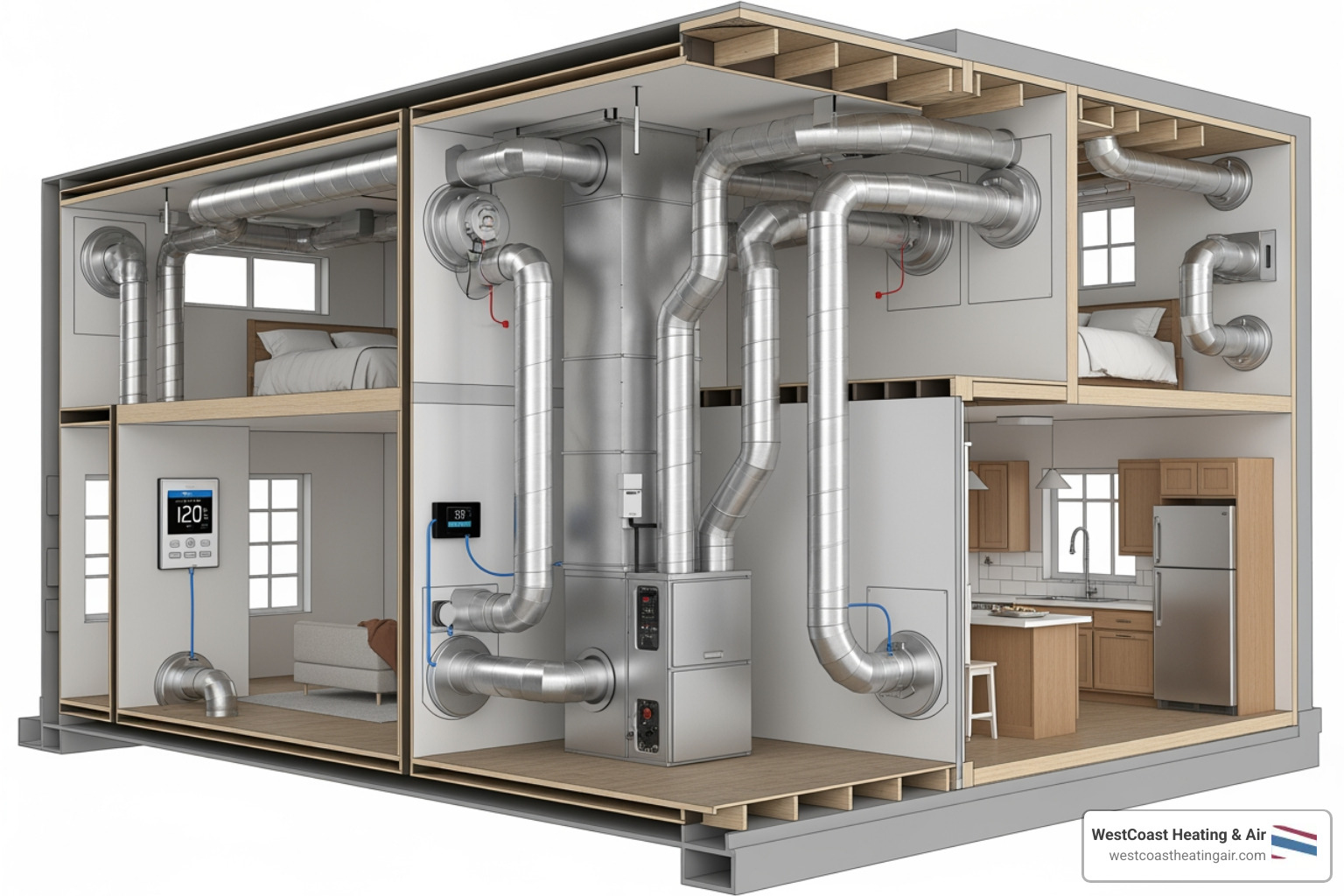
At its heart, a furnace zone control system is a sophisticated method of managing heating and cooling throughout your home. Imagine your home divided into distinct areas, or “zones,” each with its own temperature preferences. Instead of one central thermostat dictating the climate for the entire house, a zone control system allows each zone to have its own thermostat, providing individual control over its environment. This addresses the common problem of temperature imbalances that arise from varying factors like room size, sun exposure, window area, and how each room is used.
The basic premise is simple: why heat or cool rooms you aren’t using to the same degree as occupied ones? A zoned HVAC system splits your home into multiple zones, each controlled by its own thermostat. This means that if you want to change the temperature in just one room or floor, you can do that, rather than affecting the entire home. It’s like having multiple light switches for different rooms instead of one switch for the whole house – giving you similar flexibility for temperature control.
The Core Components of a Furnace Zone Control System
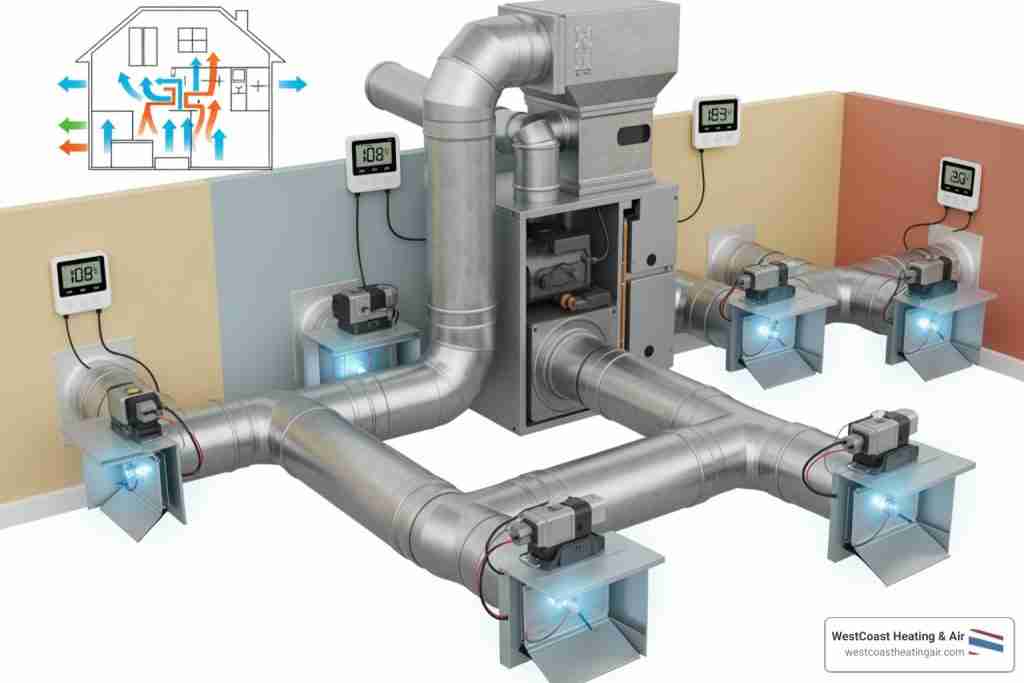
Understanding how a furnace zone control system works begins with its main components. These elements work in harmony to deliver conditioned air precisely where and when it’s needed:
- Zone Thermostats: These are installed in each designated zone of your home. They function just like a regular thermostat, allowing you to set the desired temperature for that specific area. Many modern systems integrate with smart thermostats, providing advanced features like remote control via a smartphone or tablet and programmable schedules.
- Motorized Dampers: These are essentially valves or plates installed within your home’s ductwork. When a zone calls for heating or cooling, the control panel signals the appropriate dampers to open, allowing conditioned air to flow into that zone. Conversely, dampers for zones that have reached their desired temperature, or are unoccupied, will close to restrict airflow. These dampers are often powered by small motors called actuators, which respond to signals from the control panel.
- Zone Control Panel (or System Controller): This is the “brain” of the entire operation. It receives signals from all the zone thermostats, processes them, and then directs the appropriate motorized dampers to open or close. It also communicates with your central furnace (or air conditioner) to tell it when to turn on and how much conditioned air to produce.
These components integrate with your existing HVAC system, whether it’s a traditional ducted system or, in some cases, can even complement solutions like Ductless Heating and Cooling for specific areas.
The Zoning Process: From Thermostat to Temperature
Let’s walk through the process of how a furnace zone control system brings comfort to a specific area of your home:
- Thermostat Call for Heat/Cool: It all starts when a zone thermostat detects that the temperature in its area deviates from the setpoint. For example, if you’ve set your living room to 72°F and it drops to 70°F, the thermostat sends a signal.
- Control Panel Communication: This signal is transmitted to the central zone control panel. The panel acts as the traffic controller, understanding which zone needs attention.
- Dampers Open/Close: Based on the thermostat’s demand, the control panel sends commands to the motorized dampers in the ductwork. The dampers leading to the living room zone will open, allowing air to pass through, while dampers for other zones that are already satisfied or don’t require conditioning will remain closed.
- Central HVAC System Activation: Simultaneously, the control panel signals your central furnace to turn on and begin producing heated air.
- Airflow Redirection: The heated air from the furnace travels through the main ducts. Because the dampers are selectively open, the conditioned air is efficiently directed primarily into the living room zone.
- Satisfying Zone Demand: Once the living room reaches its desired 72°F, its thermostat signals the control panel, which then closes the dampers for that zone and may signal the furnace to cycle down or turn off if no other zones are calling for conditioning.
This intelligent process ensures that your home’s energy is used effectively, delivering comfort exactly where it’s needed.
The Transformative Benefits of HVAC Zoning
Installing a furnace zone control system isn’t just about fixing a problem; it’s about changing your home’s comfort and efficiency. We’ve seen how these systems can drastically improve daily living for homeowners in areas like Tacoma, Spanaway, and University Place. The benefits extend beyond just temperature, touching on energy savings and even indoor air quality.
Best Comfort and Consistency
The most gratifying benefit of a zone control system is the increased comfort felt throughout your home. Gone will be the days of hot or cold spots, or constant battles over the thermostat.
- Eliminating Temperature Variations: If your home has multiple levels, rooms with large windows, or areas exposed to varying sunlight, you likely experience inconsistent temperatures. A zoned system eliminates these variations, allowing you to set specific temperatures for each area. For instance, you can keep the bedrooms cooler at night for better sleep while maintaining a warmer living room for relaxation or entertaining guests. This ensures that every member of your household can enjoy their preferred climate.
- Customized Temperature Settings: With a zone control system, you have the power to customize temperatures based on how you use different rooms. You can have a warm and cozy family room, cool and comfortable bedrooms, and a basement that is largely unoccupied and kept at a lower temperature. This level of personalized comfort makes your home truly feel like “home sweet home.” For a complete approach to comfort, consider exploring our Residential Heating and Cooling Company services.
Improved Energy Efficiency
Beyond comfort, furnace zone control systems are champions of energy efficiency, leading to significant savings on your utility bills.
- Targeted Heating and Cooling: One of the biggest energy wastes in traditional HVAC systems is conditioning unoccupied spaces. Zoning solves this by directing conditioned air only to the zones that need it. This means your furnace isn’t working overtime to heat an empty guest bedroom or a chilly basement that’s only used for storage.
- Reduced Energy Waste & Lower Bills: The U.S. Department of Energy suggests that HVAC zoning could lead to a 30% reduction in energy costs. This is because your temperature adjustments are targeted, preventing the system from heating or cooling the entire home when only specific areas require it. By operating only when needed, your HVAC system consumes less energy, leading to lower monthly energy bills. It’s a smarter use of energy that benefits both your wallet and the environment. To learn more about maximizing your home’s heating efficiency, check out The Best High Efficiency Heating Options for Your Home.
Improved Indoor Air Quality
While primarily focused on temperature, zoning can also play a subtle but important role in improving your home’s indoor air quality.
- Airflow Management: By controlling airflow to specific zones, a zone control system can help manage humidity levels more effectively. For example, you might reduce airflow to areas with high humidity or pollutants, like kitchens or bathrooms, while increasing it in rooms needing more ventilation.
- Reducing Pollutant Circulation: Zoning can prevent escaped particles from circulating throughout the entire house. If one area has a temporary air quality issue, the system can limit its spread by closing dampers to other zones, helping to maintain cleaner, healthier air throughout the rest of your home. This capability contributes to a healthier living environment for you and your family. For other ways to improve your home’s air, explore the benefits of Ductless Heating Benefits for the Modern Home.
Is a Zoned System the Right Choice for Your Home?
Deciding whether a furnace zone control system is right for your home involves a bit of self-reflection and an understanding of your home’s unique characteristics. We often help homeowners in communities like Orting and Roy evaluate their needs. If you’re experiencing comfort issues or high energy bills, zoning might be the perfect solution.
Signs Your Home is a Prime Candidate for Zoning
Several factors can indicate that your home would greatly benefit from a furnace zone control system:
- Multi-level or Split-level Layout: Homes with two or more stories often suffer from the “hot upstairs, cold downstairs” syndrome because heat rises. Zoning allows each level to be a separate climate.
- Rambling Floor Plan: If your home extends far beyond your main living space or has many separate rooms, a single thermostat struggles to maintain even temperatures everywhere.
- Finished Basements or Attics: These areas often have different insulation, usage patterns, and temperature needs compared to the main living areas.
- Rooms Over the Garage: Garages are unconditioned spaces, making rooms above them notoriously difficult to heat or cool consistently.
- Large, Open-Concept Areas: While beautiful, these spaces can be challenging to condition evenly, especially if they transition into other rooms with different needs.
- Concrete Slab Foundations: Homes built on concrete slabs can sometimes experience colder floors, making specific zoning beneficial for ground-level rooms.
- Large Glass Windows or Sunrooms: Rooms with significant glass exposure can experience dramatic temperature swings due to solar gain or heat loss, making them ideal candidates for their own zone.
- Inconsistent Temperatures: If some areas of your home consistently feel too hot while others are too cold, even with your thermostat adjusted, a zone control system is likely the answer.
Retrofitting vs. New Construction
A common question we hear is whether furnace zone control systems are only for new homes. The good news is, they can be installed in almost any home!
- Installing in Existing Homes: Yes, zone control systems can absolutely be installed in existing homes. This process, known as retrofitting, involves integrating the new components (thermostats, dampers, control panel) into your current ductwork and HVAC system. While it can be a more involved installation than in new construction due to ductwork access, the long-term benefits in comfort and energy savings often make it a worthwhile investment.
- Integrating into New Builds: If you’re building a new home, incorporating a zone control system from the outset is typically more straightforward and less expensive. It allows for optimal ductwork design and seamless integration of all components, ensuring maximum efficiency and comfort from day one.
- System Compatibility: Most modern HVAC systems are compatible with zoning technology. However, a professional assessment is crucial to ensure your existing furnace and ductwork can support a zoned setup effectively. For more insights on system upgrades, consider reading our guide on What to Expect During an HVAC Replacement.
Maintenance and System Longevity
Just like any part of your home’s HVAC system, proper maintenance is key to ensuring your furnace zone control system operates efficiently and effectively for years to come. One of the unique insights of zoning is that it can actually lead to a longer equipment lifespan because your HVAC system operates only when needed, reducing wear and tear.
Maintenance for Furnace Zone Control Systems
While the control panel itself is generally maintenance-free under normal operation, the overall system benefits from regular care.
- Standard HVAC Maintenance: The most important aspect is to continue with your regular furnace and air conditioning maintenance. This includes annual tune-ups for your furnace and regular checks for your AC, as recommended by manufacturers and HVAC professionals. These routine services ensure the central equipment connected to your zone system is running optimally. Learn more about the importance of regular service in our article, How Often Should You Get Your Furnace Service.
- Damper and Actuator Checks: During your HVAC tune-ups, our technicians will often inspect the motorized dampers and their actuators to ensure they are opening and closing properly. This prevents issues like blocked airflow or zones not receiving conditioned air.
- Thermostat Calibration: We’ll also check that your zone thermostats are accurately reading temperatures and communicating correctly with the control panel.
- Control Panel Inspection: While durable, a quick visual check of the control panel during routine service can identify any potential wiring issues. Adjustments might occasionally be needed if there are significant changes in your living habits or after home remodeling. For homeowners in Pierce County, regular tune-ups are a must; read more in Why You Need a Furnace Tune-Up in Pierce County.
Pairing with the Right Equipment
To maximize the benefits of your furnace zone control system, pairing it with the right HVAC equipment is crucial.
- Variable-Speed Blowers and Two-Stage Furnaces: Zone control systems are best paired with variable-speed blowers and variable-speed outdoor units. These systems can adjust their output based on the demand from individual zones, providing just the right amount of heating or cooling. Similarly, two-stage furnaces (or multi-stage) can operate at different capacities, further enhancing efficiency and comfort in a zoned setup.
- Communicating Systems: Modern communicating HVAC systems work seamlessly with zone controls. They allow the various components (furnace, outdoor unit, control panel, thermostats) to “talk” to each other, automatically calibrating for optimal performance and efficiency. This integrated approach ensures your zoned system delivers precise comfort and maximizes energy savings. If you’re considering an upgrade, our guide on Signs It’s Time to Upgrade Your HVAC System can help you decide.
Frequently Asked Questions about Zone Control
We understand that investing in a furnace zone control system can bring up a lot of questions. Here are some common inquiries we address for our clients in and around Puyallup, WA.
How many zones can a home have?
The number of zones a home can have largely depends on its floor plan, design, and your specific lifestyle patterns. While some advanced systems can support up to eight zones, and others up to six, most homes are effectively segmented into two to four zones. For multi-level homes, it’s common to designate each level as a separate zone. For instance, you might have one zone for the main living area, another for the bedrooms, and a third for a finished basement or attic. A zone can be anything you design it to be: an entire floor of your house, a group of rooms, or even just one room. The key is to group rooms with similar heating and cooling requirements and usage patterns.
Does zoning put extra strain on my furnace?
This is a common concern, but when properly designed and installed, a furnace zone control system does not put extra strain on your furnace. In fact, it often leads to longer equipment lifespan because the HVAC system operates only when needed, reducing overall wear and tear. Modern zone control systems are designed with features like bypass dampers and capacity control. Bypass dampers help regulate static pressure in the ductwork, preventing excessive pressure buildup when some zones are closed. Capacity control ensures the furnace operates at an appropriate level for the active zones, protecting internal components. Zoning does not affect the efficiency of the heating and cooling system itself, but it makes the most efficient use of the system’s energy by only conditioning spaces that need it, reducing wasted operation. Regular Fall HVAC Maintenance: Prepare Your Home for the Autumn Cold can also ensure your system is ready for efficient operation with zoning.
Is zoning a new or complicated technology?
Despite its advanced capabilities, zoning is not a new technology. Zone damper systems have actually been installed for over 50 years! While the underlying principles are well-established, modern advancements have made zone control systems much more sophisticated, user-friendly, and integrated with smart home technology. The installation itself requires basic industry knowledge of airflow, duct design, and low voltage control wiring, making it a job for experienced HVAC professionals. It’s not a DIY project, but it’s also not an overly complex undertaking for certified technicians. The technology has evolved to be highly reliable and intuitive, offering homeowners unprecedented control over their indoor climate.
Achieve Perfect Climate Control in Your Home
A furnace zone control system offers a compelling solution for achieving ultimate comfort and efficiency in your home. By allowing you to customize temperatures in different areas, you can eliminate frustrating hot and cold spots, enjoy personalized climate control, and significantly reduce your energy consumption. This intelligent approach to heating and cooling not only improves your daily living but also contributes to a longer lifespan for your HVAC equipment and potentially even better indoor air quality.
At WestCoast Heating & Air, we pride ourselves on our customized system design, customer education, and commitment to top-quality products and service, backed by over 20 years of local experience in Puyallup, Tacoma, and surrounding areas. We can assess your home’s unique needs and help you determine if a furnace zone control system is the right investment for your comfort and energy savings.
For a complete evaluation of your home’s heating needs and to explore your options, learn more about our Gas Furnace services.