Understanding Furnace System Upgrades
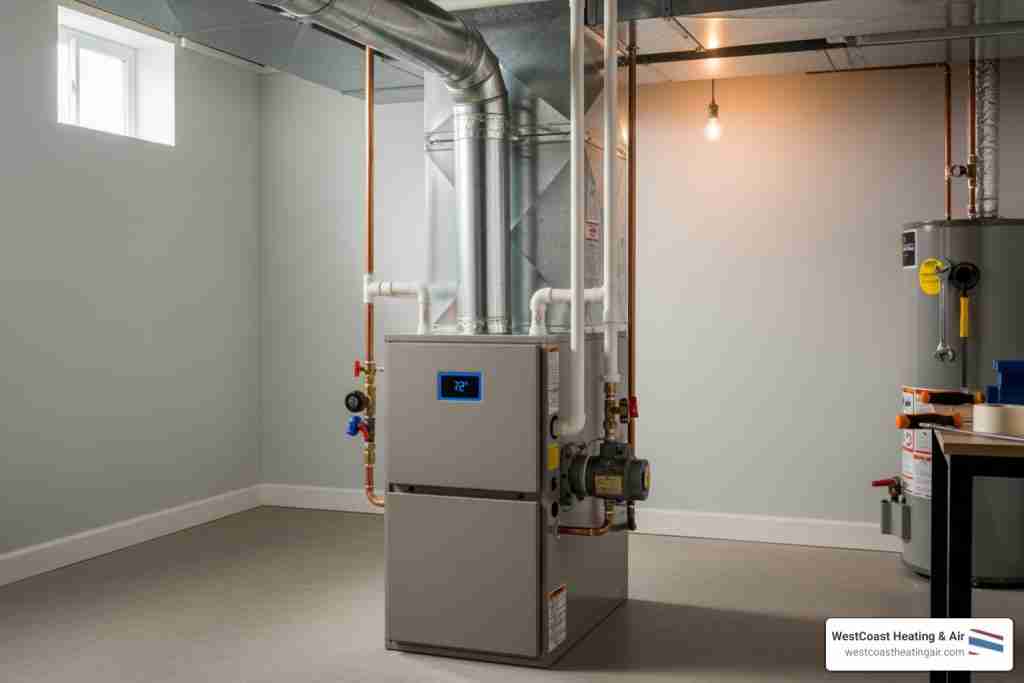
Furnace system upgrades can transform how your home feels during Puyallup’s cold months. If you’re dealing with uneven heating, high energy bills, or an aging furnace, upgrading key components or replacing your entire system can make a real difference. Modern furnaces run more efficiently, heat more evenly, and often improve your indoor air quality. Whether you’re looking at a full replacement or targeted improvements like a smart thermostat or variable-speed blower, the right upgrade can cut your heating costs and keep your family comfortable all winter long.
Quick Answer: What Are Furnace System Upgrades?
- High-Efficiency Furnaces: Models with AFUE ratings of 90% or higher that waste less fuel
- Component Upgrades: Variable-speed blowers, electronic ignition, and smart thermostats
- Ductwork Improvements: Sealing leaks and adding insulation to improve airflow
- Air Quality Improvements: High-MERV filters and whole-home humidifiers
- Fuel Source Changes: Switching to cleaner, more efficient energy options
For a complete overview of heating solutions, check out our guide on high-efficiency heating options. Ready to explore your upgrade options? Contact WestCoast Heating & Air for a personalized assessment.
Signs Your Furnace Needs an Upgrade
Sometimes, your furnace tries to tell you it’s time for a change. Recognizing these signals can help you make a timely decision, saving you from future headaches and discomfort. If your furnace is frequently on your mind, it might be time to consider furnace system upgrades.
Here are the key signs that your furnace might be ready for an upgrade or replacement:
- Furnace Age Over 15 Years: Most furnaces have a lifespan of 15 to 20 years. If your unit is approaching or has passed this mark, its efficiency likely isn’t what it used to be. While regular maintenance can extend its life, an older system is more prone to issues. For example, furnaces made in the early 1970s often had AFUE ratings around 65%, a stark contrast to today’s high-efficiency models.
- Rising Energy Bills: Are you noticing a steady increase in your heating costs, even when your usage habits haven’t changed? An aging or inefficient furnace has to work harder to heat your home, consuming more fuel and driving up your utility bills. This is a classic sign that your system is losing its efficiency.
- Frequent Repairs: If we’re visiting your home more often than you’d like to fix your furnace, it might be trying to tell us something. Constant breakdowns, especially expensive ones, often indicate that the system is at the end of its functional life. Repairing a major component like a heat exchanger or control module on an older unit can often be more expensive than the long-term benefit.
- Uneven Heating: Do you have “cold spots” in certain rooms while others are too warm? This inconsistency often points to an underperforming furnace, poor ductwork, or inadequate insulation. An upgraded system can provide more consistent temperatures throughout your home.
- Strange Noises: Furnaces aren’t meant to be loud. If your unit is making unusual banging, rattling, whistling, or groaning sounds, it’s a clear indicator of mechanical problems. A noisy system could also suggest issues with your ductwork, such as an undersized system or problems with the indoor coil. For more on this, check out our insights on common furnace noises in Puyallup.
- Poor Indoor Air Quality: Is your home excessively dusty, or are you noticing a decline in air freshness? Leaky ducts can pull dust, allergens, and other particles from unconditioned spaces like attics or crawl spaces, circulating them throughout your home. An older furnace might also lack the filtration capabilities of modern systems.
- Visible Rust or Cracks: Rust on the furnace’s exterior or cracks in the heat exchanger are serious concerns. A cracked heat exchanger, in particular, is dangerous as it can lead to carbon monoxide leaks and usually means the furnace needs immediate replacement. Our guide on preventing carbon monoxide leaks in Puyallup offers important safety information.
Recognizing these signs early can help you avoid a complete system failure during the coldest months. For a deeper dive into when to consider a change, you can read our article on signs it’s time to upgrade your HVAC system and consult the ENERGY STAR guide on replacement.
Key Types of Furnace System Upgrades
This section explores the main upgrades available to improve your home’s heating. Whether you’re looking for greater efficiency, improved comfort, or better indoor air quality, there’s a furnace system upgrade that can meet your needs.
Upgrading to a High-Efficiency Furnace
One of the most impactful furnace system upgrades you can make is replacing an older unit with a high-efficiency model. These modern furnaces are designed to convert more of their fuel into usable heat, dramatically reducing waste and improving your home’s energy footprint.
- AFUE Ratings Explained: AFUE stands for Annual Fuel Utilization Efficiency. This rating measures how efficiently a furnace converts its fuel into heating energy over an entire heating season. It’s expressed as a percentage. For example, a furnace with a 95% AFUE rating means that 95% of the fuel it consumes is converted into heat for your home, while only 5% is lost through the exhaust. The lowest efficiency allowed by law for new gas furnaces is 78%, but many modern models achieve 97% AFUE or higher. ENERGY STAR qualified furnaces are, on average, 15% more efficient than conventional models, leading to significant savings.
- Condensing Furnace Technology: High-efficiency furnaces, particularly those with AFUE ratings of 90% or higher, are often “condensing furnaces.” These units extract additional heat from exhaust gases by condensing water vapor, which would otherwise escape up the flue. This process makes them highly efficient but also produces mildly acidic condensate that needs to be drained away, typically through PVC piping.
- Two-Stage Furnaces: Unlike older single-stage furnaces that operate at full capacity or off, two-stage furnaces have two heating levels: high for extremely cold days and low for milder ones. This allows them to run for longer cycles at a lower, quieter setting, providing more consistent temperatures and reducing temperature swings.
- Modulating Furnaces: Taking efficiency and comfort a step further, modulating furnaces can continuously adjust their heat output in small increments (sometimes as little as 1% at a time). This precise control allows them to match the exact heating needs of your home, resulting in incredibly consistent temperatures, optimal efficiency, and virtually silent operation.
- ENERGY STAR Certified Models: When considering furnace system upgrades, always look for the ENERGY STAR label. These products meet strict energy efficiency guidelines set by the EPA and can significantly reduce your energy bills while contributing to a smaller carbon footprint.
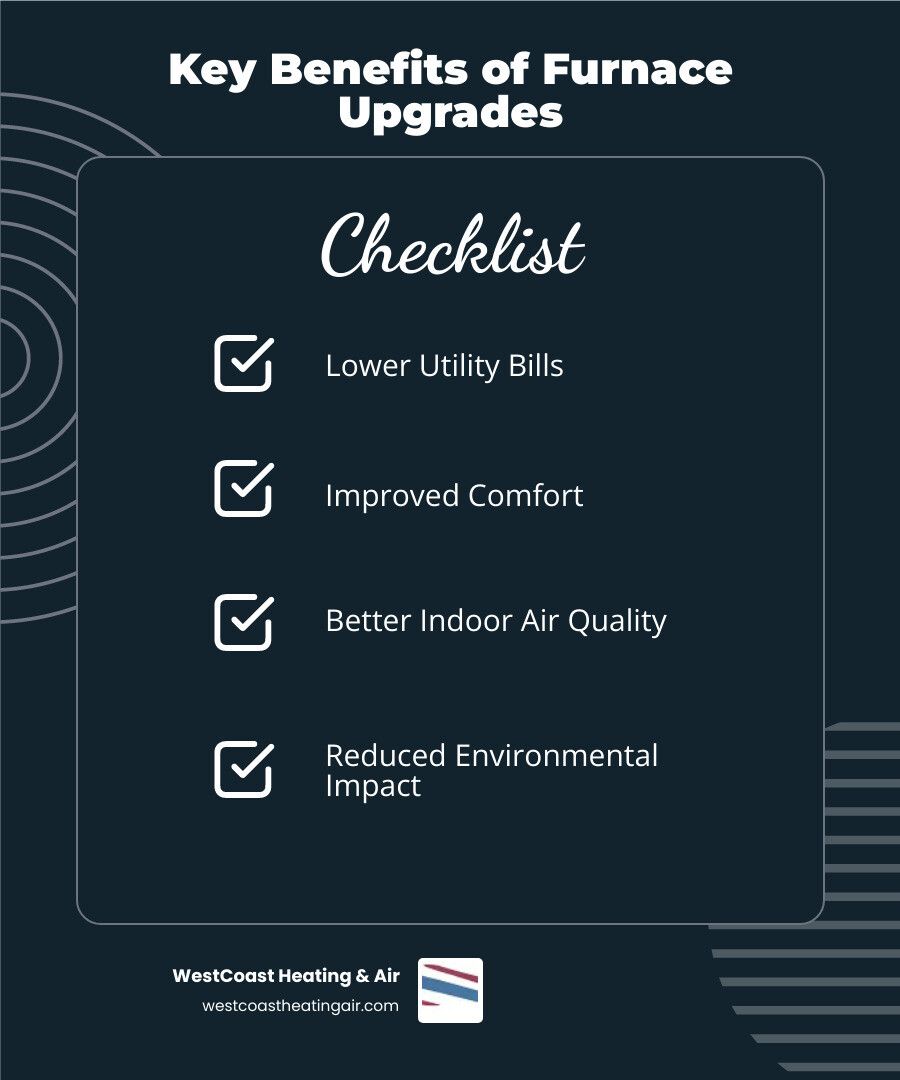
- Benefits: Upgrading to a high-efficiency furnace means lower utility bills due to reduced fuel consumption and a significantly reduced carbon footprint from less energy waste. The return on investment (ROI) for upgrading to a 90+ efficient furnace over an 80+ model can be well above 10%.
For a comprehensive look at your options, explore our guide on the best high-efficiency heating options for your home.
Enhancing Components for Better Performance
Even if a full furnace replacement isn’t in the cards, targeted furnace system upgrades to specific components can still yield impressive results in comfort and efficiency.
- Variable-Speed Blower Motors: The blower motor is responsible for circulating heated air throughout your home. Replacing an old, fixed-speed (PSC) fan motor with a variable-speed (ECM) one is a smart move. ECM drives can adjust their speed to precisely meet your home’s heating demands, leading to energy savings, quiet operation, and more consistent airflow. This means fewer cold spots and a more comfortable living environment.
- Electronic Ignition Systems: Older furnaces often rely on a constantly burning pilot light. Modern furnaces use electronic ignition systems, which only ignite the burner when heat is needed. This eliminates the energy waste of a pilot light, boosting efficiency and often contributing to a higher AFUE rating.
- High-MERV Air Filters: Your furnace’s filter is your home’s first line of defense against airborne particles. Upgrading to a high-MERV (Minimum Efficiency Reporting Value) air filter, such as a MERV 8 or higher, can significantly improve your indoor air quality. These filters capture more dust, pollen, pet dander, and other allergens, making your home a healthier place to breathe. We always ensure the filter selected is appropriate for your system’s airflow requirements.
- Smart Thermostats: Think of a smart thermostat as a personal assistant for your home’s climate. These ingenious devices learn your family’s routines and preferences, automatically adjusting temperatures to optimize energy usage. You can control them remotely via smartphone apps, receive energy usage reports, and even get personalized saving tips. A simple 2°F thermostat adjustment can save energy and reduce emissions by about 6%. Smart thermostats are a fantastic addition to any furnace system upgrade.
The Importance of Ductwork in Furnace System Upgrades
Your furnace might be a powerhouse, but if your ductwork isn’t up to par, much of that heated air can go to waste. Ductwork is the circulatory system of your HVAC system, and its condition profoundly impacts efficiency and comfort.
- Ductwork’s Role in Efficiency: Leaky or improperly designed ducts can account for significant energy loss, forcing your furnace to work harder and longer to maintain desired temperatures. This directly translates to higher utility bills.
- Signs of Poor Ductwork: Common indicators include uneven heating (some rooms too cold, others too warm), excessive dust throughout your home (leaky ducts can pull particles from unconditioned areas), and noticeable drafts near vents. We often find flex ducts that are sagging, crushed, or improperly supported, which restricts airflow.
- Air Leaks and Duct Sealing: One of the most common ductwork issues is air leaks at joints and connections. We inspect all exposed ducts, repairing or replacing damaged sections and sealing all visible leaks with UL 181 tape and/or mastic. This simple yet effective furnace system upgrade ensures that conditioned air reaches its intended destination.
- Duct Insulation: Insulating ducts, especially those running through unconditioned spaces like attics, crawl spaces, or garages, helps prevent heat loss in winter and heat gain in summer. This keeps the air at its desired temperature as it travels through your home.
- Benefits of Proper Ductwork: With properly sealed and insulated ductwork, you’ll experience improved air distribution, more consistent temperatures, and improved system efficiency. We ensure accurate load calculations (following ACCA Manual J) and proper equipment sizing (ACCA Manual S) to guarantee your entire system, including ductwork, operates optimally. For more technical details on residential duct systems, you can refer to ACCA Manual D. It’s worth noting that nearly half of all heating and cooling systems in U.S. homes are not installed to manufacturer’s instructions, often leading to below-rated performance – and ductwork is a big part of that equation.
The Broader Impact of Your Furnace Upgrade
A furnace system upgrade isn’t just about replacing a piece of equipment; it’s an investment in your home’s overall well-being. The ripple effects extend to your daily comfort, your impact on the environment, and even your home’s value.
| Feature | Old, Inefficient Furnace | Modern, High-Efficiency Furnace |
|---|---|---|
| AFUE Rating | <60-78% | 90-97%+ |
| Energy Usage | High | Low |
| Environmental Impact | Higher greenhouse gas emissions | Lower greenhouse gas emissions |
| Temperature Consistency | Poor, hot/cold spots | Excellent, even heating |
| Indoor Air Quality | Basic filtration, potential dust/allergen issues | Improved filtration, better humidity control |
Improving Home Comfort and Indoor Air Quality
One of the most immediate benefits of furnace system upgrades is a noticeable improvement in home comfort.
- Consistent Heating: Modern furnaces, especially two-stage or modulating models with variable-speed blowers, maintain much more consistent temperatures. They eliminate the sharp temperature swings and “cold spots” often associated with older, single-stage units that blast heat at full capacity and then shut off. This creates a much more pleasant and stable indoor environment.
- Whole-Home Humidifiers: In Washington’s variable climate, especially during our dry winter heating periods, maintaining optimal indoor humidity is crucial. A whole-home humidifier, integrated with your furnace, can prevent issues like dry skin, scratchy throats, static shock, and even protect wood furnishings. Balanced humidity promotes better sleep and overall comfort.
- Air Purification Systems: Upgraded furnaces can be integrated with advanced air purification systems. These systems, often using high-MERV filters or even UV light technology, work with your existing HVAC to filter out allergens, dust, pet dander, bacteria, and viruses from the air in every room. For families dealing with seasonal allergies or asthma, this can lead to dramatic improvements in daily comfort and respiratory health.
- Reducing Dust and Allergens: Beyond advanced filtration, properly sealed ductwork prevents your furnace from pulling contaminants from unconditioned areas and circulating them. This, combined with better filters, significantly reduces the amount of dust and allergens in your home, leading to cleaner surfaces and easier breathing. Furthermore, addressing furnace issues promptly, such as preventing carbon monoxide leaks, is critical for safety and indoor air quality. Learn more about preventing furnace carbon monoxide leaks in Puyallup.
Environmental and Long-Term Benefits of Furnace System Upgrades
Beyond immediate comfort, furnace system upgrades offer substantial long-term advantages for both your wallet and the planet.
- Energy Efficiency Savings: This is perhaps the most celebrated benefit. Upgrading to a high-efficiency furnace can save you a significant amount on heating and cooling costs—up to 20 percent annually. ENERGY STAR qualified furnaces are 15% more efficient than conventional models, translating directly into lower utility bills month after month.
- Reduced Greenhouse Gas Emissions: By consuming less fuel, high-efficiency furnaces naturally reduce your home’s carbon footprint. Furnaces with high AFUE ratings and ENERGY STAR certifications contribute to substantial energy savings and a reduction in greenhouse gas emissions, making your home more environmentally friendly.
- Switching Fuel Sources: Considering a change in your heating fuel source can also offer environmental benefits. For example, moving from oil or propane to natural gas can reduce your carbon footprint, especially if natural gas is readily available in your area. Modern gas furnaces are highly efficient, providing reliable heat. You can explore our gas furnace services for more information.
- Long-Term Return on Investment (ROI): Investing in furnace system upgrades can provide an excellent return. The typical ROI for upgrading to a 90%+ efficient furnace over an 80%+ efficient model can be well above 10% through energy savings. While the initial investment might seem substantial, the cumulative savings over the lifespan of the unit often outweigh the upfront cost.
- Increased Home Value: An updated, energy-efficient HVAC system is a major selling point for any home. It signals to potential buyers that the home is modern, comfortable, and cost-effective to operate. Upgrading your HVAC system is a smart investment that can boost your home’s overall market value. Remember to always look for ENERGY STAR certified products for guaranteed efficiency.
Frequently Asked Questions about Furnace Upgrades
We understand that considering furnace system upgrades can bring up many questions. Here are some of the most common inquiries we receive from homeowners in Puyallup and the surrounding communities.
When is it better to upgrade a furnace versus replacing the entire HVAC system?
This is a common dilemma for many homeowners. Generally, if only your furnace is old and inefficient, but your air conditioner (if you have one) is still relatively new and performs well, then upgrading just the furnace might be a good option. However, there are several factors to consider:
- Age and Condition of Your Air Conditioner: If your air conditioner is also nearing the end of its lifespan (typically 10-15 years), or if it’s already showing signs of inefficiency or frequent breakdowns, replacing both the furnace and AC simultaneously is often the most cost-effective and efficient solution. Mismatched systems (e.g., a new high-efficiency furnace paired with an old, inefficient AC coil) can reduce overall system efficiency and performance.
- Maximizing Efficiency: Modern HVAC systems are designed to work together for optimal efficiency. Replacing both units at the same time ensures full compatibility and allows your entire system to operate at its peak performance ratings. This leads to maximized energy savings and improved comfort.
- Long-Term Savings: While replacing an entire HVAC system is a larger upfront investment, it can offer greater long-term savings through improved efficiency, fewer repair costs, and a longer overall lifespan for both units.
- Our Recommendation: We often recommend considering replacing both your AC and furnace at the same time, especially if both are aging. This ensures seamless integration and maximizes your home’s comfort and energy efficiency. For more insights on this, read our article: Thinking About Replacing Your AC and Furnace at the Same Time.
How do furnace upgrades affect indoor air quality?
Furnace system upgrades can significantly improve your home’s indoor air quality (IAQ), creating a healthier and more comfortable living environment for your family.
- High-Efficiency Filters (MERV): Modern furnaces are compatible with high-MERV (Minimum Efficiency Reporting Value) air filters, such as MERV 8 or higher. These filters are much more effective at capturing microscopic particles like dust, pollen, pet dander, mold spores, and even some bacteria and viruses, preventing them from circulating through your home. HEPA filters, for example, can capture up to 99.97% of airborne particles.
- Proper Humidity Control: Upgrades can include integrating whole-home humidifiers or dehumidifiers with your furnace system. Maintaining optimal humidity levels (typically 30-50%) prevents issues like overly dry air (which can irritate respiratory passages and exacerbate allergies) and excessive humidity (which encourages mold growth and dust mites). In Washington’s varied climate, managing humidity is crucial year-round.
- Sealed Ductwork: Leaky ductwork is a major culprit for poor IAQ. Gaps and holes in your ducts can draw in dust, insulation fibers, mold spores, and other contaminants from unconditioned spaces like attics, crawl spaces, and basements. Sealing and insulating your ductwork as part of your furnace system upgrade prevents these pollutants from entering your living spaces, ensuring that the air circulating is clean and fresh.
What is AFUE and why is it important?
AFUE is a crucial term to understand when considering furnace system upgrades, as it directly relates to your furnace’s efficiency and your energy bills.
- AFUE Stands for Annual Fuel Utilization Efficiency: This is a standardized measurement used to rate the heating efficiency of furnaces and boilers.
- It Measures How Much Fuel a Furnace Converts into Usable Heat: The AFUE rating represents the percentage of the fuel consumed that is converted into warm air for your home, versus the percentage that is lost through the chimney or exhaust.
- A Higher AFUE Rating Means Greater Efficiency: For example, a furnace with a 95% AFUE rating means that for every dollar’s worth of fuel it consumes, 95 cents goes directly towards heating your home, and only 5 cents is lost as waste. In contrast, an older furnace with a 65% AFUE rating would waste 35 cents of every fuel dollar.
- Importance: A higher AFUE rating directly translates to lower heating bills because less fuel is wasted. Upgrading from an older, low-efficiency furnace (e.g., 60-70% AFUE) to a modern, high-efficiency model (90-97% AFUE) can lead to significant energy savings and a reduced environmental footprint. ENERGY STAR qualified furnaces are often 15% more efficient than conventional models, highlighting the impact of this rating.
Conclusion
As we’ve explored, furnace system upgrades offer a wealth of benefits, changing your home into a haven of comfort and efficiency. From the consistent warmth provided by a high-efficiency furnace to the clean, healthy air circulated by an optimized duct system, these improvements improve your daily life in tangible ways. You’ll enjoy lower utility bills, a smaller environmental footprint, and the peace of mind that comes with a reliable heating system.
Choosing the right upgrades for your home in Puyallup, Tacoma, Sumner, or any of our service areas requires careful consideration and expert guidance. Our team at WestCoast Heating & Air is dedicated to providing customized system designs, educating our customers, and delivering top-quality products and service, backed by over 20 years of local experience. We’re here to help you steer your options and ensure your home stays warm and comfortable for years to come.
For a customized assessment of your home’s heating needs, learn more about our gas furnace services. We’re ready to help you make smart choices for a warmer, more efficient home.