When Cold Nights Turn Critical: Understanding Emergency Furnace Replacement
Emergency gas furnace installation in spanaway, wa becomes necessary when your heating system fails completely, poses a safety risk, or breaks down during freezing weather. Here’s what you need to know right away:
When You Need Emergency Installation:
- Your furnace won’t turn on at all despite troubleshooting
- You smell gas or detect carbon monoxide
- Your heat exchanger is cracked or damaged
- Outdoor temperatures are below freezing and repairs aren’t possible
- Your furnace is over 15-20 years old and has failed catastrophically
What to Expect:
- Call a licensed HVAC professional immediately
- Initial safety assessment and system evaluation
- Selection of an appropriate replacement unit
- Professional installation (typically 4-8 hours)
- Testing and safety verification before completion
Cold nights don’t wait, and neither should you when your furnace quits. A furnace failure in Spanaway during winter isn’t just uncomfortable—it’s a genuine emergency that puts your family’s safety and your home’s infrastructure at risk. Frozen pipes, carbon monoxide hazards, and dangerously cold indoor temperatures can develop quickly when heating systems fail. While some furnace problems can be repaired, complete system failure often requires immediate replacement, especially when the unit is old, severely damaged, or poses safety concerns.
I’m Michael Smith, owner of WestCoast Heating & Air, and after three decades with Boeing and years serving Spanaway families, I’ve guided countless homeowners through emergency gas furnace installation in spanaway, wa situations. Every emergency installation starts with a safety assessment and ends with a warm, comfortable home, and I’ll walk you through exactly how the process works so you know what to expect when your heat quits.
Is It a True Emergency? Critical Signs Your Furnace Needs Replacing Now
When the chill sets in, a functioning furnace isn’t a luxury—it’s a necessity. But how do you know if your furnace issue is a minor hiccup or a full-blown emergency demanding immediate attention and potentially a new installation? We’ve seen it all, and certain signs unequivocally point to the need for an emergency gas furnace installation.
First and foremost, a complete heating failure where your furnace simply won’t turn on or produce any heat is a critical sign. If you’ve tried basic troubleshooting steps like checking the thermostat settings, ensuring the circuit breaker hasn’t tripped, or changing the filter, and still, nothing happens, it’s time to call in the professionals. We understand that a furnace that won’t light, or one that produces no heat at all, can quickly turn a chilly evening into a dangerous situation, especially during Spanaway’s colder months.
Even more alarming are carbon monoxide risks. Carbon monoxide (CO) is an odorless, colorless gas that can be deadly. If your CO detector goes off, or if you notice a yellow or flickering pilot light (a healthy pilot light should be steady and blue), these are immediate red flags. A yellow flame often indicates incomplete combustion, which can produce carbon monoxide. We prioritize your family’s safety above all else. For more information on this silent killer, read our detailed article on Does Your Home Have a Carbon Monoxide Leak?.
A cracked heat exchanger is another critical issue that often warrants immediate replacement. The heat exchanger separates the combustion gases from the air circulating through your home. If it cracks, combustion gases, including carbon monoxide, can leak into your indoor air. This is a severe safety hazard that cannot be ignored. Similarly, if you detect a distinct smell of gas, evacuate your home immediately and call your gas provider and us. Gas leaks are incredibly dangerous and require swift, professional intervention.
The age of your furnace also plays a significant role. If your furnace is over 15-20 years old and experiences a major breakdown, especially one involving the heat exchanger or multiple expensive components, replacement is often the more economical and safer option. Older furnaces are simply less efficient and more prone to catastrophic failures. Combine age with frequent breakdowns, where your unit is constantly short-cycling or requiring repairs, and you’re looking at a money pit and an unreliable heating source. Our guide on Signs It’s Time to Upgrade Your HVAC System offers more insights into when to consider an upgrade.
Any situation that compromises the safety of your home or leaves you without heat in freezing temperatures constitutes an emergency. These aren’t just inconveniences; they are safety hazards that demand prompt, professional action.
The Dangers of Delaying Replacement
Ignoring the critical signs of a failing furnace, especially those that point to safety risks, can have severe consequences. We’ve seen the health risks associated with a malfunctioning heating system. The most serious is carbon monoxide poisoning, which can cause flu-like symptoms, dizziness, nausea, and can be fatal. If your furnace is emitting CO, even a slight delay can put lives at risk. It’s why we emphasize the importance of having working carbon monoxide detectors and understanding How to Prevent Furnace Carbon Monoxide Problems.
Beyond immediate health threats, a lack of heat during cold Spanaway winters can lead to frozen pipes. When temperatures drop below freezing, water in your pipes can expand, causing them to burst. This results in costly water damage, extensive repairs, and even greater disruption to your home and daily life. What started as a furnace problem can quickly escalate into a plumbing nightmare.
Delaying replacement also means living with worsening damage to your existing system. What might be a repairable issue today could become a more complex and expensive problem tomorrow. Components wear out, and a struggling furnace works harder, putting strain on other parts and potentially leading to a complete, irreparable breakdown.
Finally, a failing furnace operates with inefficient operation, leading to significantly increased energy bills. If your furnace is constantly running but not effectively heating your home, or if your utility costs have suddenly spiked, it’s a clear sign your system is wasting energy. While this isn’t an immediate safety emergency, it’s a financial drain that impacts your budget, and in the long run, a new, more efficient system will save you money.
Choosing the Right Gas Furnace for an Emergency
When you’re facing an emergency gas furnace installation in Spanaway, WA, the decision process can feel overwhelming. However, even under pressure, choosing the right furnace is crucial for long-term comfort, safety, and energy efficiency. We aim to guide you through this decision with clear, concise information.
One of the most important factors to consider is the AFUE rating, which stands for Annual Fuel Utilization Efficiency. This rating measures how efficiently your furnace converts fuel into heat. The higher the AFUE percentage, the more efficient the furnace, meaning less wasted energy and lower heating bills. Older furnaces might only have an AFUE of 56% to 70%, while modern, high-efficiency models can reach 90% to 98.5%. You can find a detailed analysis of AFUE ratings on Energy.gov’s website. A new, high-efficiency furnace does more than just save you money; it also helps reduce your carbon footprint by a significant margin, contributing to a healthier environment.
We generally categorize gas furnaces into three main types based on their operation:
| Furnace Type | Comfort | Efficiency | Operation |
|---|---|---|---|
| Single-Stage | Basic, on/off operation, can have temp swings | Lower-tier (70-80% AFUE) | Runs at full capacity until desired temp is met |
| Two-Stage | Better, operates at two heating levels | Mid-tier (80-90% AFUE) | Runs at partial capacity (e.g., 60-70%) most often, full capacity when needed |
| Modulating (Variable-Speed) | Best, continuous, precise temperature control | High-tier (90-98.5% AFUE) | Adjusts heat output and fan speed incrementally based on demand |
For an emergency gas furnace installation, we’ll help you consider your home size and the necessary BTU calculation (British Thermal Units) to ensure the new furnace is appropriately sized. A furnace that’s too small won’t adequately heat your home, while one that’s too large will “short-cycle” (turn on and off frequently), leading to inefficiency, premature wear, and uneven heating. Our expertise in customized system design ensures we match the perfect Gas Furnace to your home’s unique needs.
Finally, we’ll assess system compatibility with your existing ductwork and thermostat. While an emergency installation focuses on restoring heat, we also ensure the new unit integrates seamlessly with your home’s overall HVAC infrastructure.
Selecting a Unit for an Emergency Gas Furnace Installation in Spanaway, WA
During an emergency, immediate needs take precedence, but we never compromise on quality or suitability. When selecting a unit for an emergency gas furnace installation in Spanaway, WA, several practical factors come into play:
- Stock Availability: In an emergency, we aim for rapid resolution. We often have a range of reliable furnaces in stock or readily available from local distributors to ensure we can install a new system quickly. We’ll discuss options that meet your needs without unnecessary delays.
- Technician Recommendations: Our experienced technicians will assess your home, your heating needs, and your budget to provide expert recommendations. We’re committed to long-lasting solutions, not just quick fixes. Our goal is to ensure your new furnace operates efficiently and safely for years to come.
- Long-Term Reliability: We choose and recommend furnaces known for their durability and performance. Even in an emergency, we believe in installing a system that you can depend on, reducing the likelihood of future breakdowns.
- Warranty Considerations: A new furnace comes with a manufacturer’s warranty. We’ll explain the warranty details for the units we recommend, giving you peace of mind about your investment.
- Matching System to Your Home’s Needs: This is where our customized system design truly shines. We take into account your home’s size, insulation, window efficiency, and your family’s comfort preferences to ensure the emergency installation results in optimal heating performance.
The Process for Emergency Gas Furnace Installation in Spanaway, WA
When your furnace unexpectedly quits, especially during a cold snap, the process for an emergency gas furnace installation in Spanaway, WA needs to be swift, efficient, and thorough. We’ve refined our approach to ensure minimal disruption and maximum comfort for your family.
The first step is always making the emergency call. We offer 24/7 service because we know heating emergencies don’t stick to business hours. When you call, our team will listen to your concerns, gather initial information, and dispatch a technician to your home as quickly as possible. We understand that cold nights don’t wait, and neither do we.
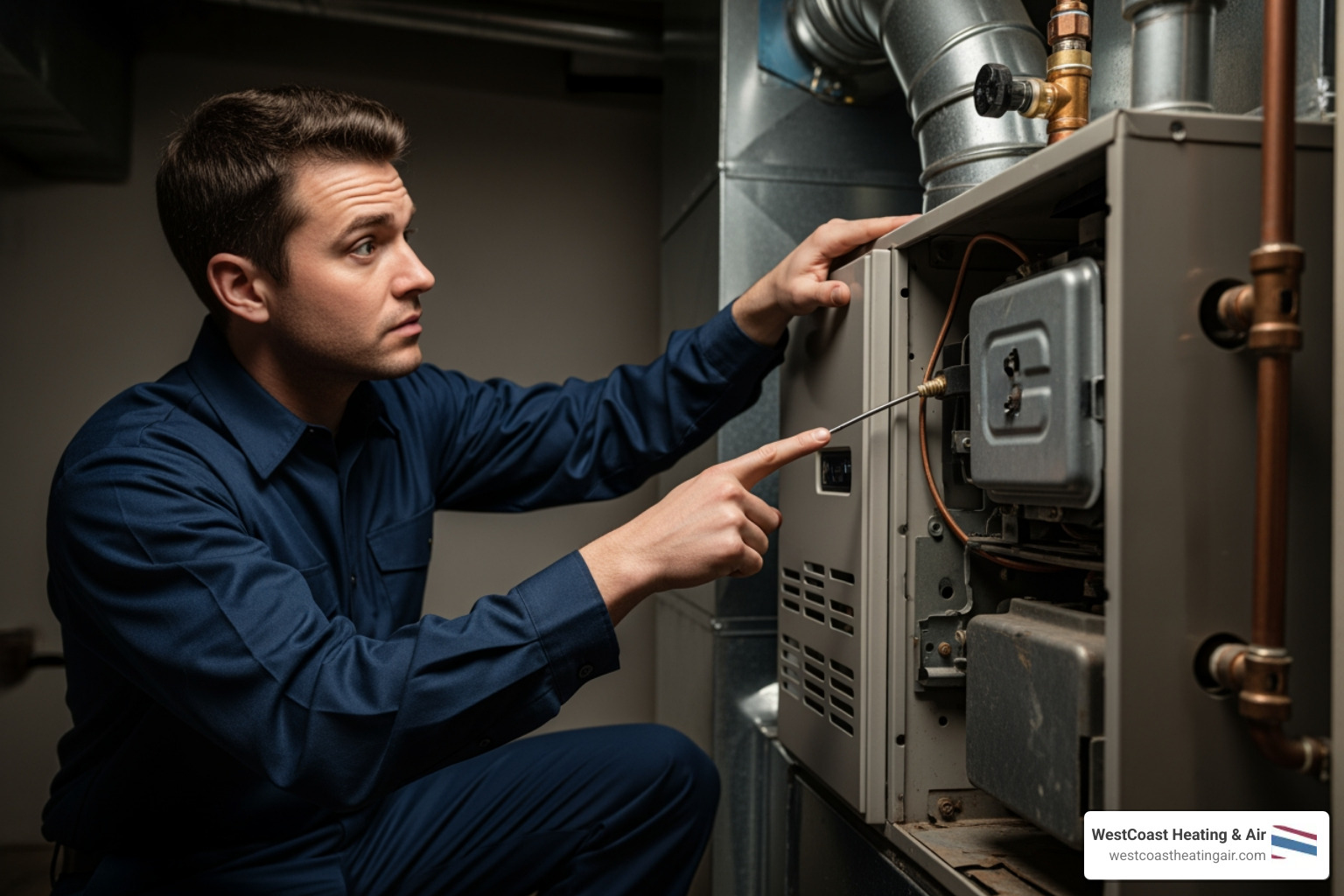
Upon arrival, our technician will conduct an initial assessment. This involves a comprehensive diagnosis of your old furnace to confirm that replacement is indeed the best course of action. They’ll check for safety issues, assess the extent of the damage, and discuss their findings with you. This is a critical step in our commitment to transparent service and customer education.
Based on the assessment, we’ll guide you through the system selection process, as discussed earlier. We’ll present suitable options from our available stock, ensuring the chosen furnace meets your home’s heating needs and energy efficiency goals.
Once a new unit is selected, our team will proceed with the safe removal of the old unit. This includes disconnecting gas lines, electrical wiring, and ductwork, and carefully taking the old furnace out of your home. Safety is paramount during this stage.
Next comes the new furnace placement. The new unit is carefully maneuvered into position, ensuring it’s level and properly aligned within your existing HVAC system space. Then, we carefully handle the ductwork connection, sealing all joints to prevent air leaks and ensure efficient heat distribution throughout your home. Any additional ductwork or modifications needed for optimal performance will be addressed.
Gas line safety is a non-negotiable priority. Our licensed technicians will expertly connect the new furnace to your home’s gas supply, performing rigorous leak tests to guarantee absolute safety. Similarly, electrical wiring for the new unit is carefully connected and tested to ensure proper power supply and operation.
Finally, we integrate the new furnace with your home’s thermostat, performing thermostat integration and calibration for optimal control. Before we consider the job complete, we conduct final system testing. This involves running the furnace through a full cycle, checking airflow, temperature rise, and all safety mechanisms to ensure it’s operating perfectly and safely. For a more general overview of what to expect, you can read our article What to Expect During an HVAC Replacement.
Preparing Your Home for a Speedy Installation
While we handle all the technical aspects, there are a few things you can do to help us make your emergency furnace installation as speedy and smooth as possible:
- Clear a path: Ensure there’s a clear, unobstructed pathway from your front door to the furnace’s location. This allows our technicians to safely and efficiently move equipment in and out of your home.
- Remove clutter: Clear any items stored around your furnace. This provides our team with ample workspace and prevents accidental damage to your belongings.
- Secure pets: For the safety of your furry family members and our technicians, please secure any pets in a separate room or outside during the installation process.
- Plan for temporary no-heat: While we work quickly, there will be a period without heat. Dress warmly and consider having a backup heat source like a space heater for a specific room, if safe to do so.
- Ask questions: Don’t hesitate to ask our technicians any questions you have about the process, your new furnace, or its operation. We believe in customer education and want you to feel comfortable and informed.
After the Installation: Essential Care for Your New Furnace
Congratulations, you have a new, efficient furnace! While the emergency might be over, the journey to long-term comfort and efficiency has just begun. Proper post-installation care is vital for ensuring your new system operates optimally for years to come. We believe in empowering our customers with the knowledge to protect their investment.
The importance of maintenance cannot be overstated. Just like a car needs regular oil changes, your furnace needs consistent care to run smoothly and avoid future emergencies. This isn’t just about preventing breakdowns; it’s about maximizing energy efficiency, extending the lifespan of your unit, and ensuring your family’s safety. Our article, Don’t Neglect Winter Furnace Care in Sumner, offers excellent tips applicable to all our service areas, including Spanaway.
One of the simplest yet most effective maintenance tasks you can perform is regular filter changes. Your furnace filter traps dust, pollen, pet dander, and other airborne particles, preventing them from circulating throughout your home and building up within your furnace. A dirty filter restricts airflow, forcing your furnace to work harder, which reduces efficiency and can lead to premature wear. We recommend checking your filter monthly and changing it every 1-3 months, or more frequently if you have pets or allergies. For a deeper dive into the importance of filters for indoor air quality, check out this article from the EPA.
Beyond DIY tasks, scheduling professional tune-ups is crucial. We recommend an annual furnace tune-up, ideally in the fall before the heating season begins. During a tune-up, our NATE-certified technicians will carefully inspect, clean, and fine-tune all components of your furnace. This helps us detect potential issues before they escalate, ensure all parts are working correctly, and optimize your system’s performance for maximum efficiency and safety. Our article on How Often Should You Get Your Furnace Service? provides more details on why this regular service is so important.
After your emergency gas furnace installation, take some time to familiarize yourself with your new system by monitoring performance and understanding your new thermostat. Modern thermostats, especially smart thermostats, offer advanced features like remote control, energy-saving schedules, and real-time temperature adjustments. Learning how to use these features effectively can significantly improve your home’s comfort and help you manage energy bills.
Frequently Asked Questions about Emergency Furnace Needs
We understand that an emergency gas furnace installation can raise many questions. Here, we address some of the most common inquiries we receive from homeowners in Spanaway and surrounding areas.
Why is professional installation more critical than a DIY approach in an emergency?
While the urge to fix things yourself can be strong, especially in an emergency, professional installation for a gas furnace is not just recommended—it’s essential. The risks associated with a DIY approach are simply too high:
- Safety Risks: Gas furnaces involve natural gas lines and electrical components. Improper handling can lead to incredibly dangerous situations, including gas leaks, carbon monoxide poisoning, and electrical fires. Our licensed professionals are trained to work safely with these systems, preventing hazardous conditions like gas leaks or poor air quality.
- Gas Lines and Carbon Monoxide: Connecting gas lines requires specialized knowledge and tools to ensure secure, leak-free connections. Incorrect connections can lead to deadly carbon monoxide leaks. We perform rigorous safety tests for gas and carbon monoxide after every installation.
- Local Building Codes and Permits: Furnace installations, especially in areas like Spanaway and Puyallup, are subject to specific local building codes and often require permits and inspections. Professionals are familiar with these regulations, ensuring your installation meets all legal and safety standards.
- Manufacturer Warranty: Most furnace manufacturers require professional installation for their warranties to be valid. A DIY installation, or one by an unlicensed individual, could void your warranty, leaving you responsible for future repair costs.
- System Efficiency: Proper installation is key to maximizing your furnace’s efficiency and lifespan. An improperly installed furnace may not operate efficiently, leading to higher energy bills and premature breakdowns. Our expertise ensures your system operates efficiently and safely from day one. You can learn more about the importance of professional care in our article Gas Furnace Repair in Puyallup, WA.
How long does an emergency furnace installation take?
The typical timeframe for an emergency gas furnace installation ranges from four to eight hours. While this might seem like a broad estimate, several factors can influence the exact duration:
- Complexity of the Job: A straightforward replacement of a similar unit in an accessible location will be on the shorter end of the spectrum.
- Ductwork Modifications: If your new furnace requires adjustments to your existing ductwork to ensure proper airflow and efficiency, this can add time.
- Electrical Updates: Older homes or certain furnace models might require minor electrical upgrades or dedicated circuits, which would extend the installation time.
- Gas Line Work: While our technicians handle gas line connections efficiently, any required modifications or repairs to your home’s gas line system can also impact the overall duration.
Rest assured, our goal is always to restore your heat as quickly and safely as possible, without cutting corners. We’ll provide you with a clear timeline after our initial assessment.
Should I replace my AC at the same time as my emergency furnace installation?
This is an excellent question that many homeowners consider, especially if their air conditioning unit is also aging. While your immediate need is for heat, there can be significant advantages to replacing your AC unit concurrently with your emergency gas furnace installation:
- System Compatibility: HVAC systems are designed to work together. Replacing both units at once ensures optimal compatibility and performance between your heating and cooling components.
- Age of AC Unit: If your AC unit is nearing the end of its lifespan (typically 10-15 years for AC, 15-20 for furnaces), replacing it now can save you from another emergency situation down the line.
- Efficiency Gains: Modern furnaces and AC units are significantly more energy-efficient than older models. Replacing both can lead to substantial long-term energy savings and a reduced carbon footprint.
- Potential for Savings: Often, installing both units at the same time can be more cost-effective than separate installations. We can often streamline labor and materials, passing those efficiencies on to you.
- Convenience: Having both systems installed during one visit means less disruption to your home over time.
We encourage you to discuss this option with our technicians during your emergency service call. They can assess your current AC unit and help you weigh the pros and cons based on your specific situation and budget. For more insights, check out our blog post, Westcoast Heating & Air – Thinking About Replacing Your AC and Furnace at the Same Time.
Your Partner for Warmth and Safety in Spanaway
When the unexpected happens and your heat quits, you need a trusted partner who can act swiftly and reliably. At WestCoast Heating & Air, we understand the urgency and stress that comes with needing an emergency gas furnace installation in Spanaway, WA. Our commitment is to restoring your heat quickly, ensuring your family’s safety, and providing a long-term solution that brings comfort back to your home.
We pride ourselves on our professional expertise, backed by years of experience and NATE-certified technicians. Our approach goes beyond just fixing the problem; we believe in customer education, ensuring you understand your new system and how to maintain it. Through customized system design, we ensure your new furnace is perfectly matched to your home’s unique needs, providing optimal efficiency and consistent warmth.
As a local, family-owned HVAC company serving Spanaway and surrounding communities like Puyallup, Sumner, Tacoma, and University Place, we’re dedicated to our neighbors. We’re not just installing furnaces; we’re building relationships and ensuring the long-term comfort and safety of your home. Don’t let a furnace emergency leave you in the cold.
Contact us today to experience the WestCoast Heating & Air difference and find a trusted local expert for your gas furnace needs. We’re here to help you weather any storm.