
Understanding BTU: The Key to Effective Home Cooling
When shopping for air conditioning in Puyallup, WA, you’ll quickly encounter the term btu cooling meaning on every product specification sheet. But what does it actually tell you about keeping your home comfortable?
BTU stands for British Thermal Unit, and it measures how much heat energy your air conditioner can remove from your home in one hour. Specifically, one BTU is the amount of heat required to raise or lower the temperature of one pound of water by one degree Fahrenheit. For cooling systems, a higher BTU rating means more heat removal power—but that doesn’t mean you should simply buy the biggest unit available.
Quick Answer:
- BTU = British Thermal Unit (a measurement of heat energy)
- For Cooling: BTUs measure how much heat an AC removes per hour
- Standard Rule: Most homes need about 20 BTUs per square foot
- 1 Ton = 12,000 BTUs (common industry conversion)
- Why It Matters: Wrong BTU sizing leads to poor comfort and higher energy bills
The challenge for Puyallup homeowners is finding the right balance. An air conditioner that’s too powerful for your space will cycle on and off constantly, leaving your home feeling clammy and driving up energy costs. One that’s too weak will run nonstop without ever reaching your desired temperature. Understanding what BTU really means helps you avoid both problems.
For expert guidance on air conditioning systems custom to your specific needs, or to schedule a professional assessment of your home’s cooling requirements, WestCoast Heating & Air can help you get it right the first time.
What is a BTU and How Does It Measure Cooling?
Understanding the fundamental concept of BTU is the first step toward making informed decisions about your home’s cooling system. It’s more than just an acronym; it’s the language of thermal energy.
The Definition of a British Thermal Unit (BTU)
At its core, a British Thermal Unit (BTU) is a unit of heat energy. Historically, it originated as a practical measure of heat in England in the early 19th century, though the actual technical term “British thermal unit” surprisingly originated in the United States. One BTU is precisely defined as the amount of heat required to raise the temperature of one pound of water by one degree Fahrenheit.
To put that into perspective, a single BTU is a relatively small amount of energy. Some even approximate it as the heat produced by burning a single wooden kitchen match, or the energy it takes to lift a one-pound weight 778 feet. While this might sound like an abstract scientific concept, it’s incredibly practical when we apply it to heating and cooling systems. It’s the standard unit for measuring thermal energy in many household appliances, from furnaces to water heaters, and, most importantly for us, air conditioners.
Understanding the btu cooling meaning for your home
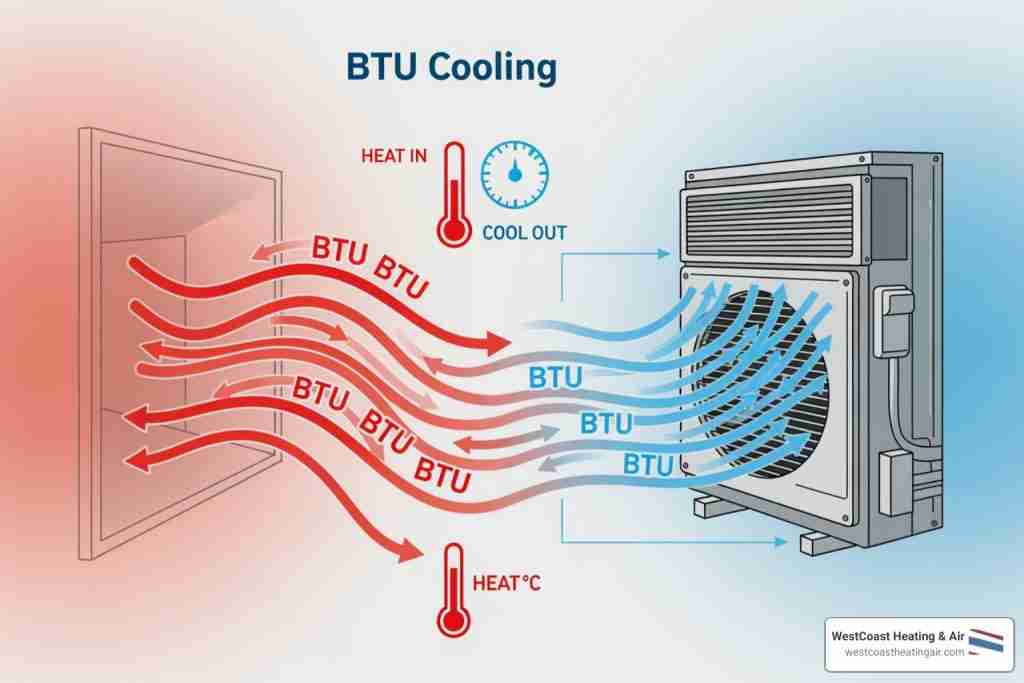
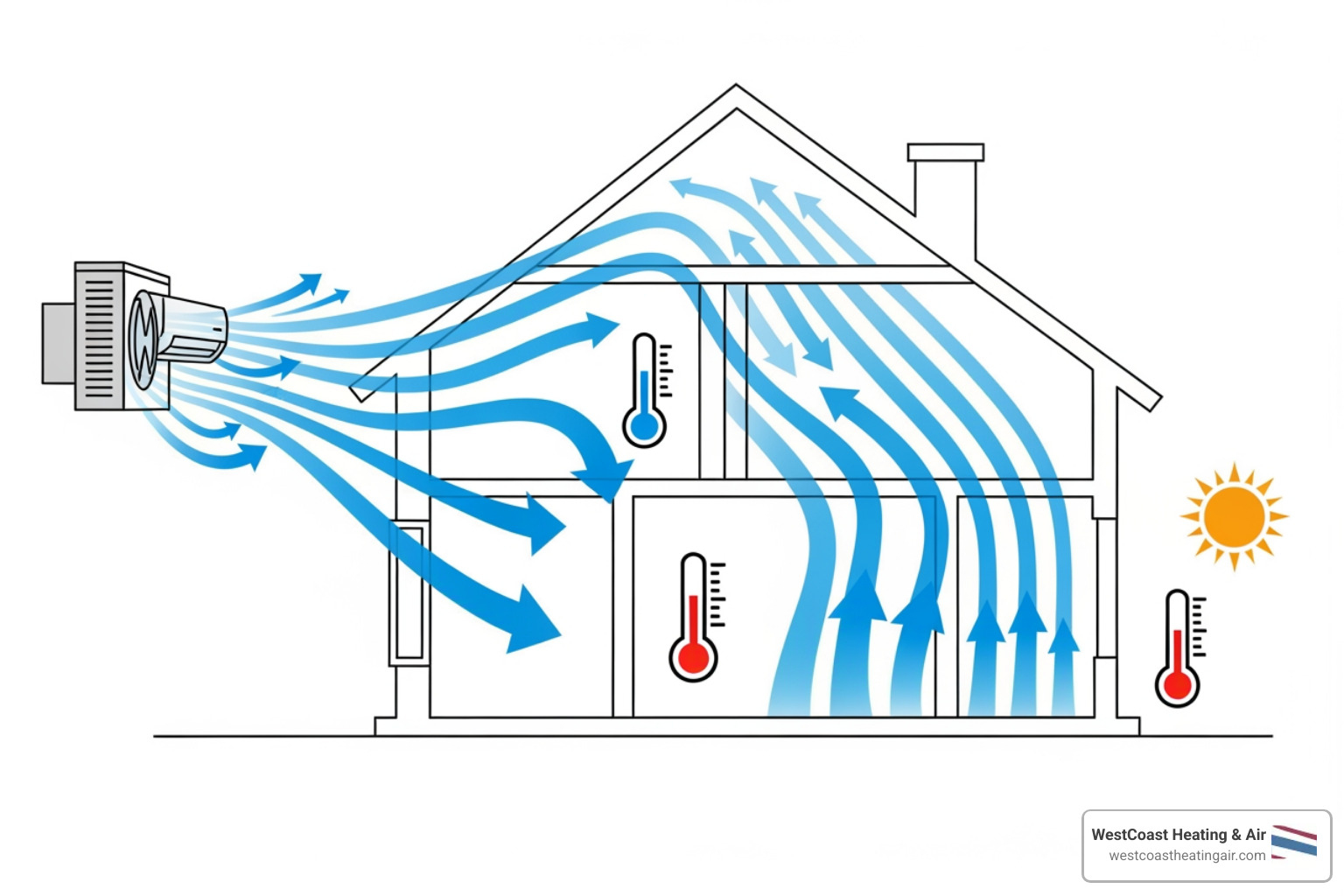
When we talk about the btu cooling meaning in the context of your home’s air conditioner, we’re referring to its capacity to remove heat. Unlike a heater that adds heat to a space, an air conditioner’s job is to absorb heat from the indoor air and transfer it outside. So, an AC unit’s BTU rating tells us how much heat it can effectively remove from a space in one hour.
For example, a 12,000 BTU air conditioner is designed to absorb and move 12,000 British Thermal Units of heat out of your home every hour. The higher the BTU rating, the greater the cooling power. A 15,000 BTU unit can remove up to 15,000 BTUs of heat per hour. This measure is crucial because it directly translates to how quickly and effectively your air conditioner can cool down a room or your entire home in the warm summer months here in Puyallup and the surrounding areas.
An air conditioner works by using a system of coils, fans, and refrigerant to move heat from your indoor air to the outside. This process not only cools the air but also removes humidity, which is a key part of feeling comfortable. The BTU rating quantifies this heat absorption and removal capability, making it the primary metric for determining the appropriate size of an air conditioning unit for a given space. This is why understanding your AC’s BTU rating is so vital for maintaining a comfortable and energy-efficient home. For more detailed information on how these systems work, explore our resources on Air Conditioning.
The Goldilocks Problem: Consequences of Incorrect BTU Sizing
Choosing the right BTU rating for your air conditioner is a lot like Goldilocks finding the perfect bed – it needs to be “just right.” An air conditioner with too few or too many BTUs for your space can lead to a host of problems, impacting not only your comfort but also your energy bills and the lifespan of your system. This is why we emphasize proper sizing for homes in University Place, Tacoma, and all our service areas.
Too Many BTUs: The Problem with Oversized Units
It might seem logical to think that a more powerful air conditioner would be better, but when it comes to BTUs, bigger isn’t always better. An air conditioner with too many BTUs for the space it’s trying to cool is considered “oversized,” and this can lead to several undesirable outcomes:
- Short-Cycling: An oversized unit will cool the space too quickly, reach the thermostat’s set temperature, and then shut off. This rapid on-and-off cycling is known as “short-cycling.” While it might sound efficient, it’s actually detrimental.
- Ineffective Dehumidification: Air conditioners don’t just cool; they also remove humidity. An oversized unit that short-cycles doesn’t run long enough to complete the dehumidification process effectively. This leaves your home feeling cold but clammy or “sticky,” which is far from comfortable, especially during our muggier summer days.
- Wasted Energy: Each time an AC unit starts up, it draws a significant amount of power. Frequent short-cycling means more startups, leading to increased energy consumption and higher utility bills.
- Increased Wear and Tear: The constant starting and stopping puts undue stress on the system’s components, leading to faster wear and tear and potentially shortening the overall lifespan of your air conditioner.
- Temperature Swings: Because the unit cools so quickly and then turns off, you might experience noticeable temperature fluctuations, rather than consistent comfort.
An oversized air conditioner is a costly mistake that undermines both comfort and efficiency. We’ve explored these issues in more detail in our article, Why Is an Oversized Air Conditioner Problematic?.
Too Few BTUs: The Struggle of Undersized Units
On the flip side, an air conditioner with too few BTUs for your space is “undersized,” and this presents its own set of problems:
- Continuous Operation: An undersized unit will struggle to meet the cooling demand of your home. It will run almost continuously, trying desperately to reach the set temperature, but often failing to do so.
- Inadequate Cooling: Even with constant running, the unit may not be powerful enough to cool the entire space effectively. You’ll likely find that your home never truly feels cool, especially on the hottest days.
- Hot Spots: Certain areas of your home, particularly those exposed to more sunlight or with poor insulation, will remain noticeably warmer than others, creating uncomfortable “hot spots.”
- Increased Utility Bills: While it might seem like a smaller unit would save energy, its continuous operation means it’s constantly drawing power, leading to surprisingly high energy bills.
- System Strain: The perpetual running puts immense strain on the compressor and other vital components. This constant overworking can lead to premature breakdowns and a significantly reduced system lifespan.
Neither an oversized nor an undersized air conditioner is ideal. The goal is to match the BTU capacity precisely to your home’s unique cooling load to ensure optimal comfort, energy efficiency, and longevity for your system. This balance is key to achieving true home comfort in places like Sumner, Steilacoom, and Spanaway.
How to Determine the Right BTU for Your Space
Finding the “just right” BTU rating for your home’s air conditioning is critical for both comfort and efficiency. While it might seem daunting, we can guide you through the process, starting with a basic estimate and then factoring in other crucial elements.
Step 1: The Basic Square Footage Calculation
The quickest way to get a rough estimate of the BTU needed for your space is by using its square footage. A general guideline suggests that an air conditioner needs approximately 20 BTUs for each square foot of living space.
To use this rule of thumb, simply measure the length and width of the room (or the entire area you wish to cool) and multiply them to get the square footage. Then, multiply that number by 20.
Example: For a 1,400-square-foot home, you would multiply 1,400 sq ft by 20 BTUs/sq ft, resulting in approximately 28,000 BTUs. Similarly, a 1,600 square foot home would need a 32,000 BTU air conditioner (1600 sq ft * 20 BTU/sq ft).
Here’s a quick guide for common room sizes:
| Square Footage (Sq Ft) | Estimated BTU Needed |
|---|---|
| 100-150 | 5,000 |
| 150-250 | 6,000-8,000 |
| 250-350 | 8,000-10,000 |
| 350-450 | 10,000-12,000 |
| 450-550 | 12,000-14,000 |
| 550-700 | 14,000-18,000 |
| 700-1000 | 18,000-24,000 |
| 1000-1200 | 24,000-28,000 |
| 1200-1500 | 28,000-34,000 |
| 1500-2000 | 34,000-42,000 |
These figures are a starting point. While a 12,000 BTU unit is often suggested for 400-500 square feet, a well-sealed and insulated home could potentially condition up to 1,000 square feet with the same unit. This highlights the importance of considering more than just basic dimensions.
Step 2: Adjusting for Other Critical Factors
While square footage provides a baseline, it doesn’t tell the whole story. Many other factors influence the actual heat load of your home and, consequently, the required BTU capacity. Ignoring these can lead to an inefficient and uncomfortable cooling experience in areas like SeaTac, Roy, and Orting.
- Ceiling Height: Standard calculations assume 8-foot ceilings. If your rooms have higher ceilings (e.g., vaulted ceilings), there’s more air volume to cool, meaning you’ll need more BTUs.
- Sun Exposure: Rooms that face south or west, or those with large windows, receive more direct sunlight and absorb more heat. These areas will require additional cooling capacity. Consider the orientation of your home on your property.
- Insulation Quality: A home with poor insulation allows heat to easily seep in during the summer. Well-insulated homes retain cool air better, reducing the BTU demand. This is particularly important for older homes in our service areas.
- Window Type: Single-pane windows are less efficient than double-pane or energy-efficient windows, allowing more heat transfer. The number and size of windows also play a significant role.
- Climate Zone: While the general climate in Puyallup, WA, is milder than some other regions, we still experience warm summers. Homes in consistently hotter or more humid areas will generally require higher BTU ratings.
- Number of Occupants: Every person in a room generates body heat. More people mean a higher heat load, necessitating a higher BTU capacity.
- Heat-generating Appliances: Kitchens, laundry rooms, and areas with numerous electronics (computers, large TVs) produce additional heat. These spaces may require a bump in BTU capacity to stay comfortable.
- Ductwork Condition: Leaky or uninsulated ductwork can lose a significant amount of cooled air before it reaches your living spaces, effectively reducing your system’s overall cooling power.
Given these variables, the most accurate way to determine your home’s precise BTU requirements is through a professional assessment using a Manual J Calculation. This is a detailed mathematical method HVAC professionals use to account for all these factors and accurately determine how much heating and cooling your specific home requires. We highly recommend requesting a Manual J Calculation from an experienced HVAC technician to ensure your system is perfectly sized.
BTU and Other Important HVAC Ratings
Understanding the btu cooling meaning is foundational, but it’s also helpful to see how it fits within the broader landscape of HVAC measurements. Other terms like “tonnage” and “SEER2” are closely related and provide a more complete picture of your air conditioner’s performance and efficiency.
From BTUs to Tons: A Simple Conversion
In the HVAC industry, especially for central air conditioning units, you’ll often hear cooling capacity discussed in “tons” rather than just BTUs. This can be confusing because it has nothing to do with the weight of the unit!
Historically, a “ton of cooling” was derived from the amount of heat required to melt one short ton (2,000 pounds) of ice in 24 hours. This process removes a specific amount of heat. Today, this historical reference translates directly to BTU:
- 1 ton of cooling capacity is equivalent to 12,000 BTUs per hour.
So, if an HVAC professional tells you your home needs a 3-ton AC unit, that means it requires an air conditioner with a cooling capacity of 36,000 BTUs (3 tons x 12,000 BTUs/ton).
Residential air conditioners typically have a capacity that ranges from two to five tons, or 24,000 to 60,000 BTUs. For example, a 1.5-ton AC typically has about 18,000 BTUs. Knowing this conversion helps us speak the same language when discussing system capacities.
Why the btu cooling meaning is crucial for energy savings
The correct BTU rating isn’t just about comfort; it’s a major factor in your energy efficiency and monthly utility bills. An incorrectly sized system, whether too large or too small, will inevitably consume more energy than necessary.
This is where other ratings like SEER2 come into play. SEER2 (Seasonal Energy Efficiency Ratio 2) is a metric that measures the energy efficiency of an air conditioning system over an entire cooling season. While BTU tells you how much cooling power a unit has, SEER2 tells you how efficiently it delivers that power. A higher SEER2 rating indicates a more energy-efficient unit.
To further understand the energy implications, we can convert BTUs to watts or kilowatts, which are the units your electricity bill uses:
- 1 Watt (W) is approximately 3.412142 Btu/h.
- Conversely, 1,000 Btu/h is approximately 0.2931 kilowatts (kW).
- To convert BTUs to kilowatts, you can use the conversion factor: multiply your BTUs by 0.000293.
Let’s look at an example:
An 18,000 BTU air conditioner, when converted to kilowatts, would be 18,000 BTU x 0.000293 = 5.27 kilowatts.
Now, to estimate energy consumption and costs:
If that 18,000 BTU (5.27 kW) unit runs for 4 hours a day:
- Daily kWh = 5.27 kW * 4 hours = 21.08 kWh/day
- Monthly kWh (30 days) = 21.08 kWh/day * 30 days = 632.4 kWh/month
According to the Bureau of Labor Statistics (BLS), the average electricity rate in the United States was 17.8 cents per kilowatt hour as of July 2024. While rates vary, let’s use this for an example:
- Estimated Monthly Cost = 632.4 kWh * $0.178/kWh = $112.56
This calculation demonstrates how selecting the right BTU size directly impacts your energy usage and bills. An undersized unit running constantly or an oversized unit short-cycling will both drive up these costs. By choosing the correct BTU rating and a high SEER2 unit, you can significantly reduce your energy consumption and contribute to a greener home. For more tips on reducing your energy footprint, check out our guide on How to Reduce Cooling Costs This Summer.
Conclusion: Achieving Perfect Comfort and Efficiency
Understanding the btu cooling meaning is not just about deciphering HVAC jargon; it’s about empowering ourselves as homeowners to make smart choices for our comfort and our wallets. We’ve seen that BTU is the fundamental measure of an air conditioner’s heat-removing power, and that getting this measurement “just right” is crucial.
An oversized unit will leave your home feeling damp and waste energy through inefficient short-cycling, leading to premature wear. An undersized unit will struggle endlessly, failing to cool your space adequately while running up your energy bills and shortening its own lifespan. The “Goldilocks problem” of finding the perfect fit is real, and it significantly impacts your daily comfort and long-term expenses.
While basic square footage calculations offer a starting point, factors like ceiling height, sun exposure, insulation quality, window types, the number of occupants, and heat-generating appliances all play a vital role in determining your home’s true cooling load. This is why professional assessments, often involving a Manual J Calculation, are invaluable.
Furthermore, we’ve explored how BTU relates to other essential HVAC metrics like tonnage, providing a clearer picture of cooling capacity, and SEER2, which highlights energy efficiency. Converting BTUs to kilowatts allows us to directly estimate energy consumption and potential costs, reinforcing why proper sizing is an investment in both comfort and savings.
At WestCoast Heating & Air, we believe in educating our neighbors in Puyallup, Tumwater, Tacoma, and beyond. Our commitment to customized system design, customer education, and top-quality service ensures that you receive an HVAC solution perfectly custom to your home’s unique needs. Don’t leave your home comfort to chance. Let our over 20 years of local experience guide you to the ideal air conditioning system.
For a deeper dive into why this measurement truly matters for your home, explore our article: What is BTU Measurement and Why Does It Matter?. When you’re ready to experience perfect comfort and efficiency, contact us for a professional assessment. We’re here to help you get it right.