
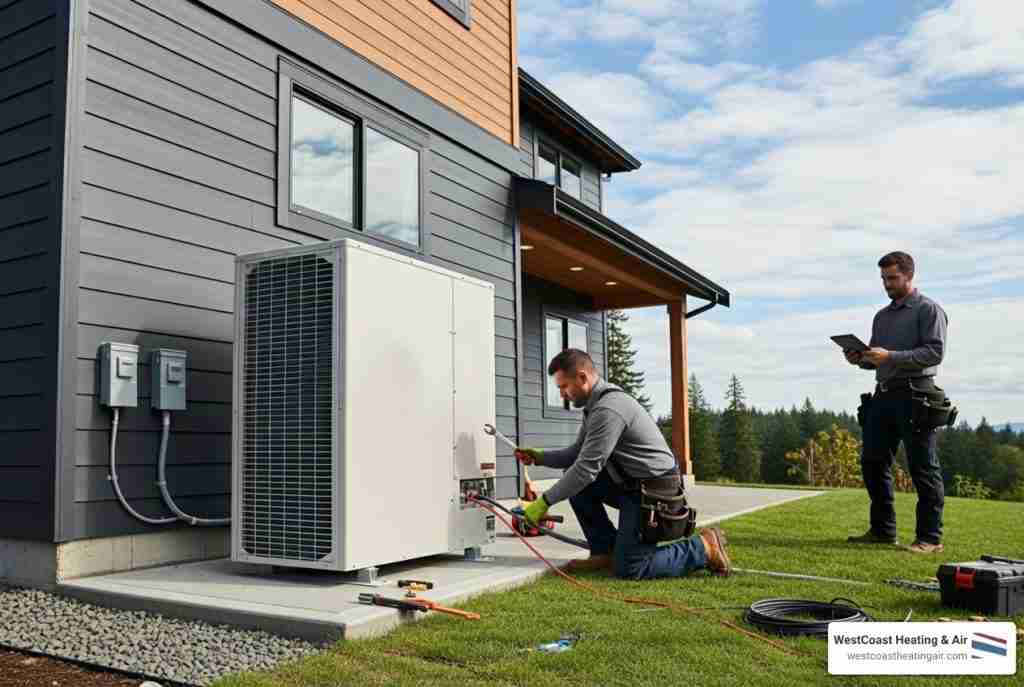
Why Tacoma Homeowners Are Turning to Heat Pumps
Finding the best heat pump installation in Tacoma, WA starts with understanding what makes a top-rated installer and why this upgrade matters for your home. A heat pump delivers both heating and cooling in one efficient system, making it ideal for Tacoma’s mild winters and warm summers. With energy savings of up to 50% compared to traditional heating systems, plus available rebates and tax credits, more homeowners are making the switch.
Top Qualities to Look for in a Tacoma Heat Pump Installer:
- Licensed, bonded, and EPA-certified technicians
- Local expertise and strong customer reviews
- Transparent pricing and workmanship warranties
- Professional home assessment and system sizing
- Support with rebate applications and financing options
For more on upgrading your system, check out the advantages of upgrading to a high-efficiency heat pump, or contact us to get started with your heat pump installation today.
Your current heating system might be costing you more than it should. Older furnaces and baseboard heaters use more energy and don’t provide cooling when summer arrives. A professionally installed heat pump solves both problems while improving your home’s comfort and indoor air quality. Whether you have existing ductwork or need a ductless solution, the right installer will guide you through the process from start to finish.
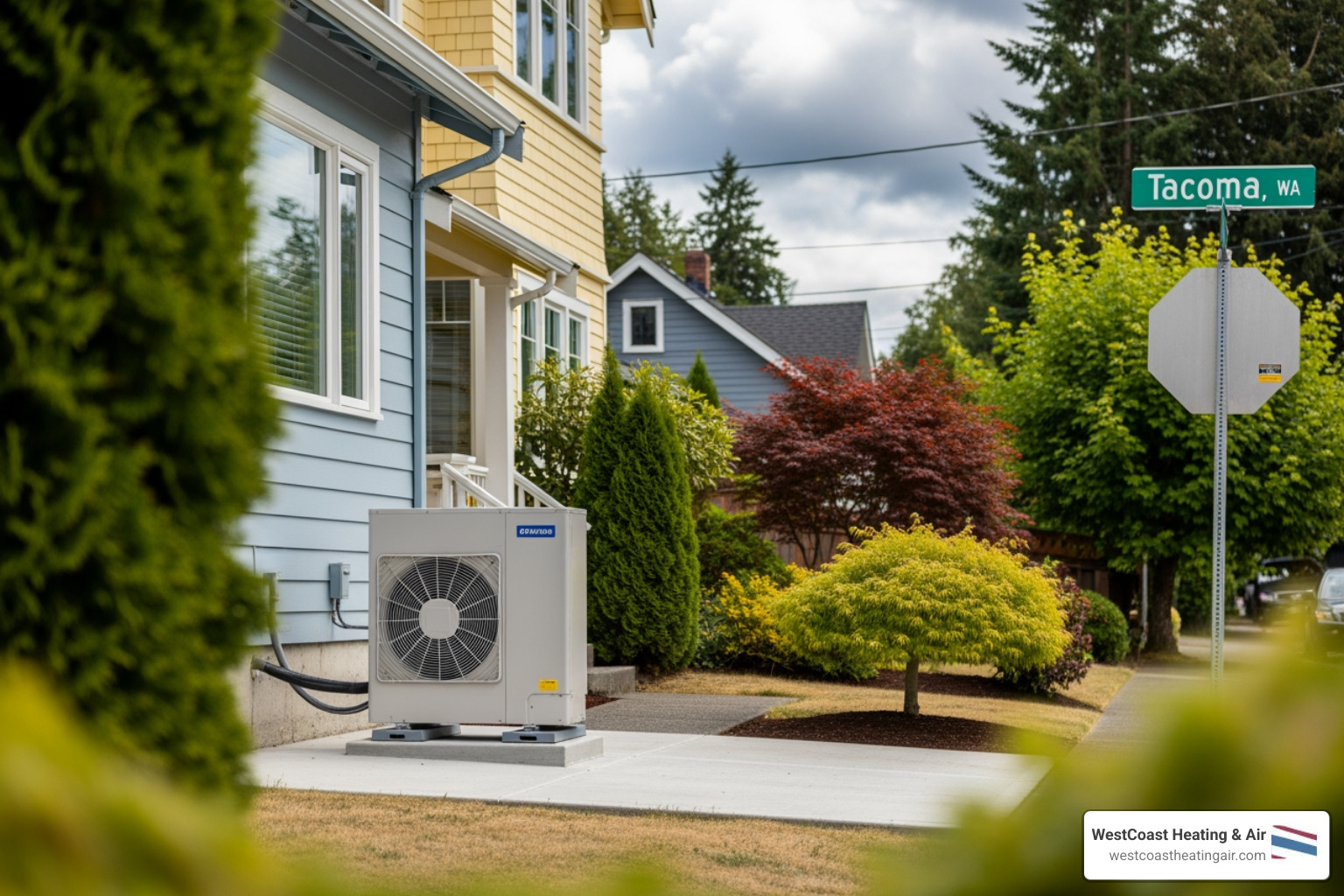
Why a Heat Pump is a Smart Choice for Your Tacoma Home
Tacoma’s mix of seasons, from cool winters to warm summers, requires a home comfort system that’s both efficient and reliable. A heat pump shines in this role, offering a smart, all-in-one solution for year-round comfort. We believe a heat pump is one of the best high-efficiency heating options for your home, providing significant benefits that go beyond just temperature control.
One of the most compelling reasons homeowners choose heat pumps is the impressive energy savings. By transferring heat rather than generating it by burning fuel, they are incredibly efficient. In fact, heat pumps can reduce your electricity use for heating by 25% to 50% compared to conventional systems like furnaces and baseboard units. This significant saving adds up over time.
A heat pump also contributes to a reduced carbon footprint, making it an environmentally friendly choice. By using electricity to move heat instead of burning fossil fuels, you’re helping create a greener Tacoma.
Consistent comfort is another hallmark of a well-installed heat pump. Unlike traditional furnaces that can create noticeable temperature swings, heat pumps deliver steady, even warmth. When summer arrives, they seamlessly switch to cooling mode, providing relief without a separate air conditioning unit. This means no more chilly spots in winter or stuffy rooms in summer—just reliable comfort.
Finally, heat pumps can significantly improve your indoor air quality. Many modern systems have advanced air filtration, removing particles, allergens, and pollutants from your home’s air. This is especially beneficial for families with allergies or respiratory concerns. Their effectiveness is showcased by their use in hospitals, where superior air quality is critical. It’s a comprehensive approach to home comfort, addressing both temperature and air quality. Explore more about heat pumps and their benefits.
Understanding Energy Efficiency in Tacoma’s Climate
A heat pump’s efficiency lies in its design. Instead of burning fuel, it moves existing heat. In winter, it extracts warmth from the outside air and transfers it into your home. In summer, the process reverses, pulling heat from inside your home and releasing it outdoors. This heat transfer process is far less energy-intensive than generating heat, leading to substantial electricity savings.
Tacoma’s mild climate is perfectly suited for a heat pump. Our winters rarely have extreme, prolonged freezes, allowing heat pumps to operate at peak efficiency. This means lower utility bills as your system works smarter, not harder. The U.S. Department of Energy highlights that this technology can slash heating electricity use by 25% to 50% compared to traditional electric resistance heaters, saving you money.
Available Rebates and Tax Credits for Homeowners
Investing in a new heat pump is a big decision, but financial incentives can make your best heat pump installation in Tacoma, WA more affordable. These programs encourage homeowners to choose energy-efficient solutions.
The federal government offers a tax credit of up to $2,000 for qualifying residential heat pump installations, available annually until 2033.
Locally, the City of Tacoma and Tacoma Power Utilities offer rebates through the Home Electrification Appliance Rebate (HEAR) program. These rebates can save you a considerable amount on electrical heat pumps. For central heat pump upgrades, you could receive between $1,000 to $2,000, while ductless heat pumps might qualify for up to $1,000. We can also help income-qualified customers explore available financing options, making these systems more accessible. We’re here to help you steer these opportunities and take full advantage of every incentive.
Choosing the Right System: Ducted vs. Ductless Heat Pumps
When considering the best heat pump installation in Tacoma, WA, one of the first big decisions you’ll face is choosing between a ducted or ductless system. Both offer exceptional heating and cooling, but they cater to different home layouts and comfort preferences. Our goal is to help you select the ideal system that perfectly matches your home’s specific needs, size, and insulation quality.
To give you a clearer picture, here’s a quick comparison:
| Feature | Ducted Heat Pump System | Ductless Heat Pump System (Mini-Split) |
|---|---|---|
| Installation | Integrates with existing or new ductwork for central air. | No ductwork needed; individual indoor units per zone. |
| Home Type | Ideal for homes with existing central HVAC systems. | Perfect for homes without ductwork, additions, or zoned needs. |
| Zoning | Provides even temperature distribution throughout the home. | Offers individual temperature control for each indoor unit/zone. |
| Aesthetics | Vents are the only visible components. | Wall-mounted indoor units are visible in each zone. |
| Flexibility | Whole-home solution, less individual room control. | Highly flexible, allows for targeted heating and cooling. |
For a deeper dive into one of these options, check out our insights on Ductless Heating and Cooling.
What to Know About Ducted Heat Pump Systems
A ducted heat pump system is often the go-to choice for homes that already have existing ductwork. This system integrates seamlessly with your current central HVAC setup, using the same network of ducts and vents to distribute conditioned air throughout your entire home. The primary outdoor unit connects to an indoor air handler, which then pushes heated or cooled air through your home’s ventilation system.
The main advantage of a ducted system is its ability to provide even temperature distribution across multiple rooms. Because the air is circulated through a comprehensive duct network, you enjoy consistent comfort from one end of your home to the other. It’s a whole-home solution, offering uniform heating in the winter and cooling in the summer, all controlled from a central thermostat. If your home is already equipped with ducts, a ducted heat pump installation can be a straightforward and highly effective upgrade.
When to Consider a Ductless Mini-Split System
Ductless mini-split systems are a true game-changer, especially for specific home situations. As the name suggests, these systems don’t require extensive ductwork, making them incredibly versatile. We often recommend them for homeowners in Tacoma, Puyallup, and our other service areas who:
- Live in Older Homes: Many older homes in the Tacoma area were built without central ductwork. Ripping out walls to install new ducts can be a costly and disruptive endeavor. Ductless mini-splits offer a fantastic alternative, providing efficient heating and cooling without the need for major renovations. Curious if an Aircon Mini Split AC for Older Homes Near Tacoma is This Doable? The answer is often a resounding yes!
- Have Room Additions or Converted Spaces: If you’ve added a new sunroom, converted a garage into a living space, or finished a basement, extending your existing ductwork might be impractical. A ductless mini-split can efficiently condition these individual zones without overloading your main HVAC system.
- Desire Zoned Heating and Cooling: Perhaps you prefer your bedroom cooler than your living room, or you only use certain areas of your home at specific times. Ductless systems allow for incredible flexibility, enabling you to set different temperatures in different zones. Each indoor unit has its own thermostat, giving you precise control over comfort and energy usage exactly where and when you need it.
Ductless mini-splits consist of a compact outdoor compressor/condenser and one or more indoor air-handling units. These units are connected by a small conduit that houses refrigerant lines, a power cable, and a condensate drain. They’re known for their quiet operation and sleek design, offering an efficient and flexible solution for targeted comfort.
Finding the Best Heat Pump Installation in Tacoma, WA: A Homeowner’s Checklist
Choosing the right partner for your best heat pump installation in Tacoma, WA is as important as selecting the right system. For reliability and peace of mind, we’ve created a checklist of qualities to look for in a top-rated installer to ensure your investment provides lasting comfort and efficiency.
When searching for a Residential Heating and Cooling Company to handle your installation, consider these key factors:
- Local Expertise: An installer who understands Tacoma’s climate and local building codes can recommend the best systems and ensure compliance with all regulations.
- Strong Customer Reviews: What do other local homeowners say? Reputable companies have a track record of satisfied customers who can attest to their professionalism and quality of work.
- Commitment to Professionalism: Look for a company that demonstrates clear communication, punctuality, and respect for your home from start to finish.
- Customized System Design: Every home is unique. A top-tier installer will assess your specific needs and design a system customized for your home, not a one-size-fits-all solution.
- Customer Education: A good installer will explain your options, answer your questions, and ensure you understand how to operate and maintain your new system.
Essential Qualifications for a Reputable Installer
To ensure high-quality service, vet your potential installer thoroughly. Here are the essential qualifications a reputable company should possess:
- Licensed and Insured: This is non-negotiable. A licensed contractor meets state and local standards, and insurance protects you and the technicians from accidents or damages.
- EPA Certified Technicians: Heat pump systems use refrigerants regulated by the EPA. Technicians with EPA 608 certification are trained to handle them safely and responsibly.
- Years of Experience: A proven track record demonstrates consistent quality. Our team brings over 20 years of local experience to every project, so we know how to handle any challenge.
- Manufacturer Training: Heat pump technology is always evolving. Installers who invest in ongoing manufacturer training are better equipped to install and service the latest models correctly. This specialized knowledge ensures optimal system performance and longevity.
- Workmanship Warranty: A reputable installer stands behind their work. Look for companies that offer a solid labor and workmanship warranty for peace of mind.
What to Expect During Your Heat Pump Installation Project
A heat pump installation project can seem like a big undertaking, but the right team makes it a smooth process. We strive to make it transparent and stress-free from the start.
Here’s a general overview of what to expect:
- Comprehensive Home Assessment: Our experts will visit your property to assess its size, layout, insulation, existing ductwork, and your specific heating and cooling needs. This step is crucial for accurate system sizing and ensuring your new heat pump is perfectly matched to your home.
- System Selection Guidance: Based on the assessment, we’ll present custom options, explaining the differences between systems, models, and efficiency ratings. We’ll answer all your questions to help you make an informed decision that aligns with your comfort preferences and budget.
- Transparent Installation Timeline: Once you’ve chosen a system, we’ll provide a clear installation timeline. Many standard installations can be completed in a single day. We’ll discuss preparation steps, like clearing work areas, to ensure our technicians can work safely and efficiently.
- Professional Installation: On installation day, our licensed and EPA-certified technicians will arrive promptly. They’ll install your new system, adhering to all local codes and manufacturer specifications. This includes setting up all indoor and outdoor components, refrigerant lines, electrical connections, and the thermostat. For a general idea of the process, you can refer to What to Expect During an HVAC Replacement.
- Final System Testing and Walkthrough: After installation, our team will rigorously test the system to ensure it’s operating correctly. Before leaving, we’ll walk you through your new system, explain its features, and provide maintenance tips. Your comfort and satisfaction are our top priorities.
Maximizing Your System’s Lifespan and Performance
Congratulations on your new heat pump! Now that you’ve made the smart choice for the best heat pump installation in Tacoma, WA, the next step is ensuring it performs optimally and lasts for many years to come. A well-maintained heat pump can serve your home efficiently for an average of 12 to 20 years, but this longevity largely depends on consistent care.
Routine maintenance is the cornerstone of maximizing your system’s lifespan and performance. Think of it like taking care of your car – regular check-ups prevent small issues from becoming big, costly problems. For heat pumps, which work year-round to provide both heating and cooling, this is especially true.
Key maintenance tasks include:
- Regular Filter Changes: Your air filter is your system’s first line of defense against dust and debris. We recommend checking and changing or cleaning your air filters every one to three months, depending on usage and household conditions (e.g., pets, allergies). A clogged filter restricts airflow, forcing your heat pump to work harder, which wastes energy and can lead to premature wear.
- Professional Tune-Ups: While filter changes are a DIY task, professional tune-ups are essential. We recommend scheduling professional service at least once a year. Because heat pumps operate in both heating and cooling modes, ideally, you should have them serviced twice a year – once in the spring to prepare for cooling season and again in the fall for heating season. These tune-ups involve cleaning coils, checking refrigerant levels, inspecting electrical components, lubricating moving parts, and ensuring all controls are functioning correctly. This proactive approach helps identify potential issues early, maintain peak efficiency, and prevent unexpected breakdowns.
By committing to a routine maintenance schedule, you not only extend the life of your heat pump but also ensure it continues to deliver consistent comfort and energy savings throughout its operational life.
Signs It’s Time to Replace Your Current Heat Pump
Even the most well-maintained heat pump won’t last forever. Like all mechanical systems, they eventually reach the end of their useful life. Recognizing the signs that it’s time to replace your current heat pump can save you from unexpected breakdowns and escalating energy costs. If you’re experiencing any of these issues in your home in Tacoma, Puyallup, or our surrounding service areas, it might be time to consider an upgrade. For more general insights, you can review Signs It’s Time to Upgrade Your HVAC System.
Here are common indicators that it’s time to think about a new heat pump:
- Age of System: If your heat pump is 10-15 years old or older, it’s likely nearing the end of its typical lifespan. Older units are less energy-efficient than modern models and may not qualify for current rebates and tax credits.
- Frequent Repairs: Are you calling for repairs more often than you’d like? Constant breakdowns, especially expensive ones, can quickly add up. At some point, the cost of repairs outweighs the cost of a new, more reliable system.
- Rising Energy Bills: If your utility bills are steadily climbing without a change in usage, your heat pump might be losing its efficiency. An aging or struggling system has to work harder to maintain your desired temperature, consuming more energy in the process.
- Inconsistent Temperatures: Are some rooms too hot while others are too cold? Uneven heating or cooling can be a sign that your heat pump is no longer distributing conditioned air effectively, or that its capacity is diminished.
- Strange Noises: While all HVAC systems make some noise, new or unusual sounds like grinding, hissing, banging, or persistent rattling often indicate mechanical problems that could lead to a complete system failure. For more specific diagnostic insights, check out How to Identify Heat Pump Problems in Puyallup.
- Reduced Airflow: If you notice weaker airflow from your vents, it could point to issues within the heat pump itself, such as a failing fan motor or a restricted coil.
Considering these signs can help you proactively plan for a replacement, ensuring continuous comfort and potentially significant energy savings with a new, high-efficiency heat pump.
Frequently Asked Questions about Heat Pump Installation
We often hear similar questions from homeowners considering a heat pump. Here are some of the most common inquiries we receive about the best heat pump installation in Tacoma, WA, along with our expert answers to help you feel fully informed.
How long does a typical heat pump installation take?
The duration of a heat pump installation can vary depending on several factors, including the complexity of the system, whether new ductwork is needed, and the specific characteristics of your home. However, many standard heat pump installations, especially those replacing an existing HVAC system, can often be completed within a single day.
Preparation steps, such as clearing the installation area, can help streamline the process. More complex projects, like installing a multi-zone ductless system or requiring significant ductwork modifications, might extend to two days. During our home assessment, we’ll provide you with a clear and accurate timeline, so you know exactly what to expect.
How often does a heat pump need professional maintenance?
Because heat pumps provide both heating and cooling, they work year-round, making regular professional maintenance even more crucial than for single-function systems. We recommend having your heat pump professionally serviced at least once a year.
For optimal performance and longevity, however, scheduling professional tune-ups twice a year is often ideal: once in the spring to prepare for the cooling season, and again in the fall to get ready for heating. This dual maintenance schedule ensures that both the heating and cooling components are inspected, cleaned, and adjusted, preventing minor issues from escalating and maximizing your system’s efficiency throughout the year. Consistent filter changes (every 1-3 months) are also essential between professional visits.
Can a heat pump effectively heat my home during a Tacoma winter?
Absolutely! Modern heat pumps are incredibly effective at heating homes during a Tacoma winter. Our region’s mild climate, where winter lows typically remain above approximately 40°F, is perfectly suited for heat pump operation.
While older models might have seen a drop in efficiency when temperatures dipped closer to freezing (around 25°F), today’s advanced heat pumps are designed with improved cold-weather performance. They can efficiently extract heat from surprisingly cold air. For the rare deep freezes we might experience, some heat pumps are equipped with supplemental heating elements, or they can be paired with an existing furnace (in a hybrid system) to ensure your home remains warm and cozy even on the coldest days. When choosing a system, we look at its Heating Seasonal Performance Factor (HSPF) rating, which indicates its heating efficiency, to ensure it’s robust enough for our local climate.
Your Partner for Expert Heat Pump Installation in Tacoma
Choosing the best heat pump installation in Tacoma, WA is a significant decision that impacts your home’s comfort, energy bills, and environmental footprint for years to come. We hope this guide has equipped you with the knowledge to make an informed choice. From understanding the impressive energy savings and available financial incentives to distinguishing between ducted and ductless systems, we believe in empowering homeowners with information.
When it comes to selecting a qualified installer, remember to look for licensed, insured, and EPA-certified technicians with a strong local reputation. A company that prioritizes customized system design, customer education, and offers a solid workmanship warranty will provide you with the lasting peace of mind you deserve.
At WestCoast Heating & Air, we are proud to be your local, family-owned HVAC partner, bringing over 20 years of experience to our communities, including University Place, Tumwater, Tacoma, Sumner, Steilacoom, Spanaway, SeaTac, Roy, Puyallup, and Orting, WA. Our commitment is to top-quality products and service, backed by our unique approach to customized system design and thorough customer education. We don’t just install systems; we build relationships, ensuring your home enjoys long-term comfort and energy savings.
Ready to experience the difference a professionally installed heat pump can make? We’re here to guide you every step of the way. Contact us for your expert heat pump consultation today, and let’s create the perfect comfort solution for your Tacoma home. Explore our services and find us at any of our locations.