
Why Understanding 10000 BTU Air Conditioner Measurements Matters
When you’re shopping for a room air conditioner in Puyallup, WA, 10000 btu air conditioner measurements are critical to getting the right fit for your space. Too many homeowners buy an AC unit based on BTU alone, only to find it doesn’t fit their window, overloads their circuit, or simply doesn’t cool effectively.
Quick Answer: Key 10000 BTU Air Conditioner Measurements
- Cooling Capacity: 400-550 square feet (depending on room conditions)
- Physical Dimensions (Window Units): Approximately 23-24″ W x 14-15″ H x 20-22″ D
- Physical Dimensions (Portable Units): Approximately 17-19″ W x 29-31″ H x 12-16″ D
- Electrical Requirements: 115V, 8-15 amps, 900-1,300 watts
- Airflow (CFM): 175-300 cubic feet per minute
- Dehumidification: 2.6-4.9 pints per hour
- Noise Level: 42-57 decibels (dBA)
- Window Width Requirements: Minimum 20″, Maximum 46″
A 10000 BTU unit is designed for medium-sized rooms, but the physical measurements, electrical demands, and installation requirements vary significantly between window, portable, and through-the-wall models. Understanding these specifications before you buy ensures your new AC will fit your space, work with your home’s electrical system, and deliver the cooling comfort you need without wasting energy or money.
If you’re dealing with an uncomfortable home and need expert guidance on the right cooling solution, WestCoast Heating & Air offers professional air conditioning services throughout Puyallup and the surrounding area, or contact us today to schedule a consultation.
What is a BTU and Why Does It Matter for Your AC?
When we talk about an air conditioner’s power, we’re usually referring to its British Thermal Unit (BTU) rating. A BTU is a unit of energy measurement. Specifically, one BTU is the amount of energy needed to raise the temperature of one pound of water by one degree Fahrenheit.
In the context of air conditioning, the BTU rating tells us how much heat an AC unit can remove from a room in one hour. A 10,000 BTU air conditioner, for example, can remove 10,000 BTUs of heat per hour. This “cooling capacity” is the fundamental measurement that helps determine how effectively an AC unit can cool a given square footage.
The relationship between BTU and square footage is crucial. An air conditioner that’s too powerful for a room will cool it too quickly, leading to inefficient operation and potential comfort issues. Conversely, an underpowered unit will struggle to cool the space, running constantly without ever quite reaching the desired temperature. Matching the BTU rating to your room size supports optimal performance and energy efficiency. For a deeper dive into this fundamental concept, explore this detailed guide: What is BTU Measurement and Why Does It Matter?.
Beyond just square footage, several room factors can influence the ideal BTU requirement. Things like direct sun exposure, the height of your ceilings, the quality of your home’s insulation, and even the number of people regularly in the room can all affect how much cooling power you need. For instance, a very sunny room might need about 10% more BTU capacity, while a kitchen, which generates its own heat, could require an additional 4,000 BTUs. Every person in a room also adds approximately 600 BTUs to the cooling load. Considering these nuances helps ensure the AC unit delivers consistent comfort.
The Problem with Incorrect Sizing
Choosing an AC unit with the wrong BTU rating can lead to a host of problems, impacting both comfort and energy use.
An oversized air conditioner, for example, will cool a room too rapidly. While this might sound good in theory, it actually prevents the unit from completing full cooling cycles. This “short cycling” means the AC turns on and off frequently, which is less efficient, puts more wear and tear on the system, and can shorten its overall lifespan. Another significant issue with an oversized unit is poor dehumidification. Air conditioners don’t just cool; they also remove moisture from the air. If a unit cools too quickly, it doesn’t run long enough to adequately dehumidify the room, leaving you with a cool but clammy and uncomfortable space. This is explained in more detail here: Why is an Oversized Air Conditioner Problematic?.
On the flip side, an undersized air conditioner will run constantly, struggling to reach and maintain the desired temperature. This constant running consumes more energy, drives up utility bills, and still may leave the space feeling warm and uncomfortable. If you’re wondering whether your current unit is operating as it should, there are helpful insights in this resource: Ask the HVAC Repairman: Is My AC Running Efficiently Near Orting?.
Typical Cooling Capacity
To give a clearer picture, here are typical cooling capacities for different BTU ratings. These are general guidelines; specific room conditions can alter these recommendations.
For smaller spaces, like a bedroom or a small office, a 5,000 BTU air conditioner is usually sufficient. This size typically cools rooms ranging from about 150 to 250 square feet, depending on layout and conditions. It is a common choice for individual rooms that don’t have excessive heat loads.
When we step up to a 10000 btu air conditioner, we’re looking at cooling capacity suitable for medium-sized rooms. Generally, a 10,000 BTU unit is recommended for rooms between 400 to 450 square feet. However, some advanced portable models may be listed for coverage up to around 550 square feet, while others might be estimated for roughly 300 square feet. Through-the-wall units can comfortably cool rooms up to about 450 square feet. These ranges highlight the importance of checking each specific model’s recommended coverage area.
These guidelines help ensure that the AC unit is neither too big nor too small, but appropriately matched to the space so it can provide efficient and effective cooling.
A Closer Look at 10000 BTU Air Conditioner Measurements
Beyond the BTU rating itself, understanding the physical dimensions, electrical requirements, and performance metrics of a 10000 btu air conditioner is essential for a successful installation and optimal operation. It’s not just about how much it cools, but how it fits and functions within your home. Our expertise in Air Conditioning allows us to guide you through these critical details.
Physical Dimensions for Different AC Types
The physical size of a 10,000 BTU air conditioner varies significantly depending on its type: window, portable, or through-the-wall. Knowing these measurements is crucial for proper placement and installation.
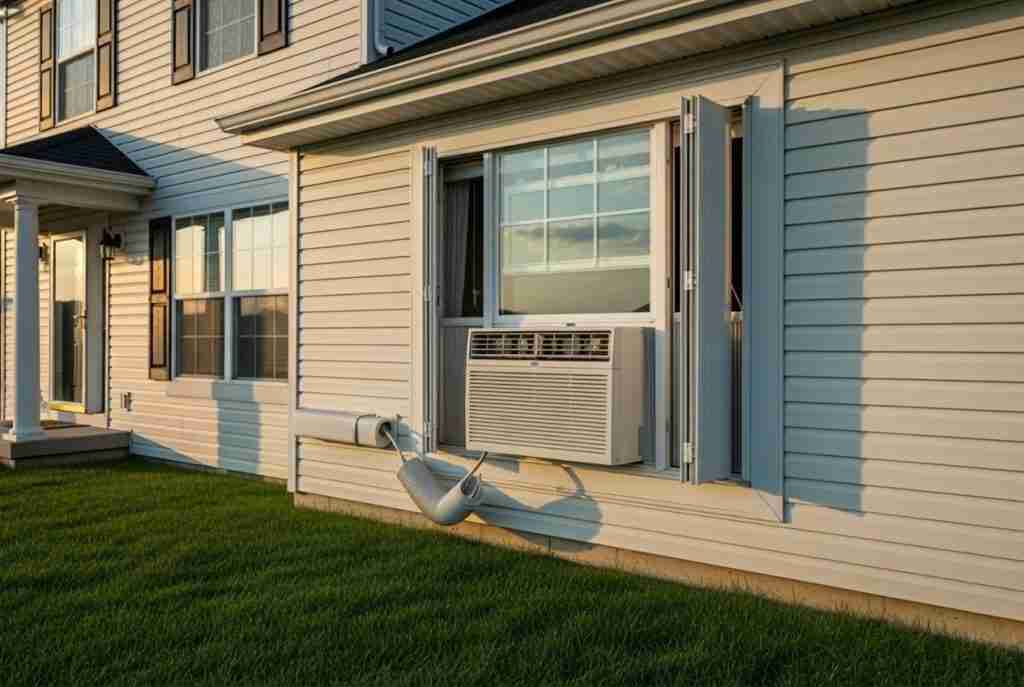
- Window AC Units: These units are designed to fit directly into a window opening. While they all aim for a compact design, their exact measurements can differ. For instance, a typical 10,000 BTU window AC measures approximately 23 5/8 inches wide, 15 inches high, and 22 1/6 inches deep. Generally, for 10,000 BTU window units, you can expect widths to range from 23 to 24 inches, heights from 14 to 15 inches, and depths from 20 to 22 inches. These units typically weigh around 75 pounds.
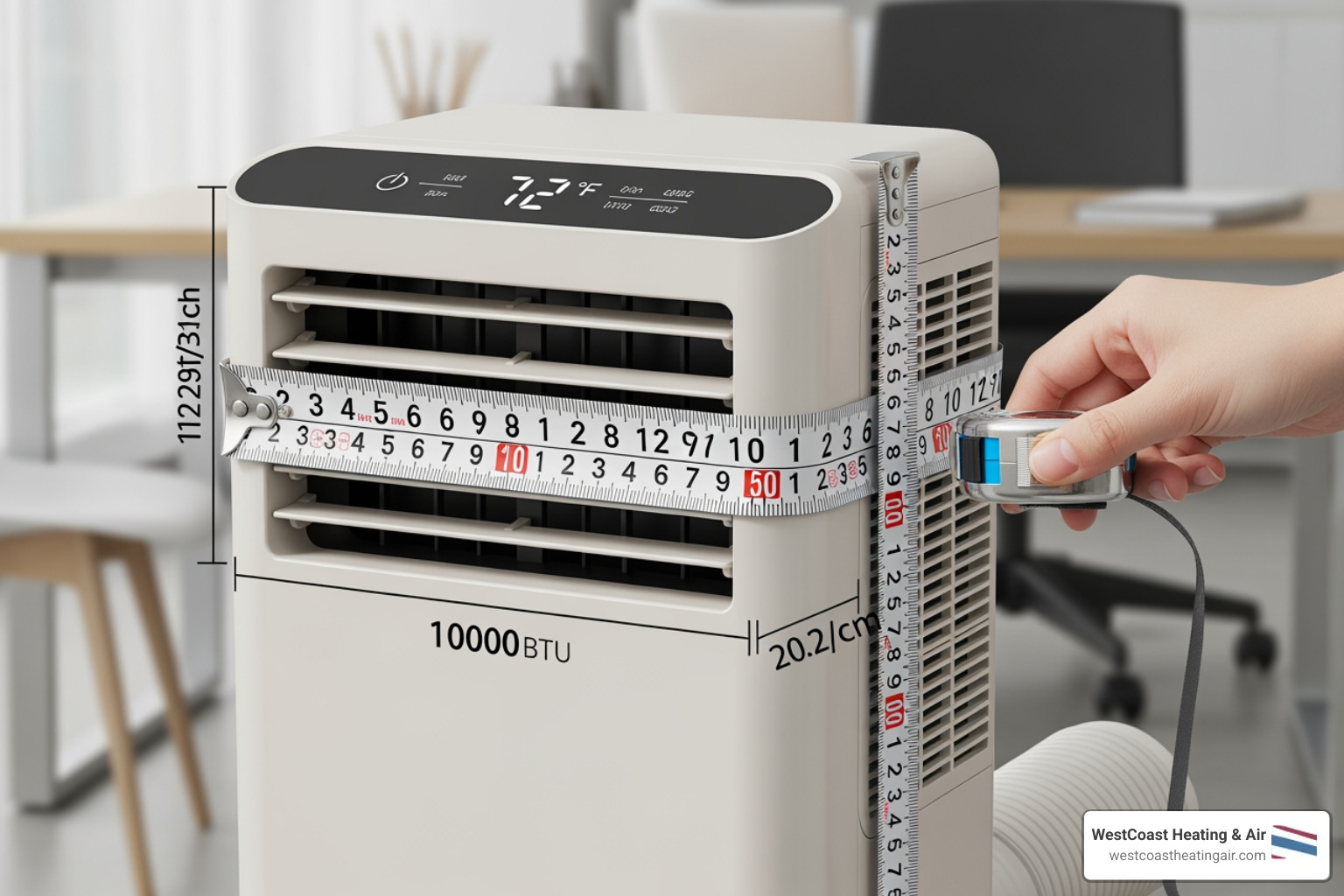
- Portable AC Units: Offering more flexibility, portable units sit on the floor and vent hot air through a window kit. Their design is usually taller and narrower. One model might measure about 17.4 inches wide, 14.3 inches deep, and 29.0 inches high, with a net weight of 70.5 lbs. Other models can be around 18.5 inches wide, 15.5 inches deep, and 30.3 inches high, weighing 70 lbs. Some lighter units are about 17 inches wide, 12 inches deep, and 31 inches high, with a net weight of 55 lbs. So, for portable units, expect widths between 17 and 19 inches, heights from 29 to 31 inches, and depths from 12 to 16 inches.
- Through-the-Wall Units: These are designed for more permanent installation into a wall sleeve. A typical 10,000 BTU through-the-wall air conditioner, for example, measures 24.18 inches wide, 14.5 inches high, and 20.5 inches deep. These dimensions are often standardized to fit existing wall openings, making them a specific choice for certain installations.
Weight considerations are also important, especially for installation. While portable units are designed with easy-roll casters, window and through-the-wall units require careful handling during installation due to their weight, which often ranges from 55 to 75 pounds or more.
Understanding the Electrical and Power Specifications
The electrical demands of your 10,000 BTU air conditioner are just as important as its physical size. Plugging a unit into an inadequate circuit can trip breakers or even pose a safety hazard. We always recommend verifying your home’s electrical capacity before purchasing.
Most 10,000 BTU air conditioners operate on a standard 115V (or 120V) electrical circuit, which is common in homes in Spanaway, WA. This means they can typically plug into a regular wall outlet without requiring special wiring. However, the amperage and wattage can vary:
- Voltage: Most 10,000 BTU units operate at 115V / 60Hz. This is the standard for most household appliances.
- Amperage: The amperage draw indicates how much electrical current the unit requires. This can range from about 8.3 amps to 15.0 amps. Many models draw between 8.5 and 9.6 amps. It’s vital to ensure the circuit you’re using can handle this load, especially if other appliances are on the same circuit.
- Wattage: Wattage directly reflects the power consumption. Typical wattage for 10,000 BTU units ranges from around 930 watts to 1,080 watts. Higher wattage means more power consumed, which translates to higher electricity usage.
Understanding these electrical specifications helps us prevent overloaded circuits and ensures safe operation. It’s also a key factor when considering your energy consumption. To learn more about managing your energy use, check out our tips on How to Reduce Cooling Costs This Summer.
Key Performance Metrics Beyond BTU
While BTU tells us about cooling power, other performance metrics give us a more complete picture of an AC unit’s efficiency and comfort features.
- CFM (Cubic Feet per Minute): This measurement indicates the airflow rate, or how much air the unit can circulate through the room per minute. A higher CFM generally means better air distribution and faster cooling. For 10,000 BTU units, CFM rates can vary. Some portable units offer around 200-225 CFM, while some window units can boast up to 300 CFM, indicating strong air circulation.
- Dehumidification Capacity: Air conditioners don’t just cool; they also remove excess moisture from the air, which is particularly beneficial in humid climates like ours in University Place, WA. This capacity is measured in pints per hour (PPH) or pints per day (PPD). Some portable ACs are rated at 2.6 PPH, while others can offer a higher rate of 4.9 PPH. A typical window unit might remove around 3.0 PPH. Some units might state their capacity in pints per day, for example, 75 pints per day, which translates to about 3.125 pints per hour.
- Noise Level (dBA): Nobody wants a roaring AC unit disturbing their peace. Noise levels are measured in decibels (dBA), with lower numbers indicating quieter operation. For 10,000 BTU units, noise levels typically range from 42 dBA to 57.4 dBA. Some portable units with inverter technology are noted for quiet operation, ranging from 42-51 dBA. Other portables may be rated around 52-54 dBA. Through-the-wall units can range from 53.1-57.4 dBA. If quiet operation is a priority, especially for bedrooms, paying attention to the dBA rating is key.
These metrics, alongside BTU, help us understand the full capabilities of a 10000 btu air conditioner and ensure it meets our specific comfort needs.
Matching Your AC to Your Space
Finding the perfect 10000 btu air conditioner means more than just checking a number on the box. It involves a bit of careful planning to ensure the unit physically fits and functions optimally within your home.
Window compatibility is one of the most critical factors for window AC units. Not all windows are created equal, and a unit that’s too wide, too narrow, or too tall simply won’t fit securely. Room layout matters as well. An AC unit needs clear space to circulate air effectively. Blocking vents or placing the unit in a corner where airflow is restricted will diminish its cooling power. Installation requirements vary by AC type, from simple window kits for window and portable units to more involved wall sleeves for through-the-wall models. Most window units are designed for standard single-hung or double-hung windows, but it’s always best to measure carefully.
How to Measure Your Room for the Right BTU
To accurately determine the BTU capacity needed for your room, start with a simple calculation and then make adjustments for specific conditions.
- Calculate Square Footage: Measure the length and width of your room and multiply them together (Length x Width = Square Feet).
- Adjusting for Conditions:
- Sun Exposure: If your room gets a lot of direct sunlight, especially during the hottest parts of the day, increase the BTU requirement by about 10%.
- Kitchens: Kitchens generate a lot of heat from cooking appliances. If your AC is cooling a kitchen area, you might need to add an extra 4,000 BTUs to the calculation.
- High Ceilings: While square footage is a good starting point, very high ceilings mean a larger volume of air to cool. This can necessitate a higher BTU unit compared to a room of the same square footage with standard ceiling heights.
- Occupancy: Each person regularly occupying the room adds approximately 600 BTUs to the cooling load. So, a room with three people will need an additional 1,800 BTUs compared to an empty room.
By taking these factors into account, you can more precisely determine the ideal BTU rating for your specific space and support efficient and effective cooling.
Critical Window Measurements for 10000 BTU Window AC Units
For those considering a window air conditioner, precise window measurements are essential. A snug and secure fit helps prevent air leaks, maximizes cooling efficiency, and improves safety.
Here are the critical window measurements to consider for a 10000 btu air conditioner:
- Minimum Window Width: This is the narrowest your window opening can be for the AC unit to fit. For many 10,000 BTU window ACs, this typically ranges from 20 to 22 inches. For example, some units specify a minimum window width of 20 inches.
- Maximum Window Width: This is the widest your window opening can be while still allowing the AC’s side panels to extend and seal securely. Many 10,000 BTU window units are designed to accommodate windows up to 36-40 inches wide, with some extending up to 46 inches.
- Minimum Window Height: The height of your window opening must be sufficient for the AC unit. For 10,000 BTU models, a minimum window height of 13 to 15 inches is commonly required.
Most window air conditioners come with an installation kit that includes expandable side panels and sealing foam. These kits are crucial for achieving a secure fit and proper sealing, which prevents cooled air from escaping and hot air from entering. A well-sealed unit operates more efficiently, saves energy, and improves comfort. Always measure your window carefully before purchasing to help guarantee a proper match.
Comparing Types of 10,000 BTU Air Conditioners
When it comes to choosing a 10000 btu air conditioner, you’re not just picking a cooling capacity; you’re also selecting a type of unit that comes with its own set of measurements, installation requirements, and best use cases. Let’s compare the three main types: Window, Portable, and Through-the-Wall ACs.
| Feature | Window AC | Portable AC | Through-the-Wall AC |
|---|---|---|---|
| Typical Dimensions (WxHxD) | 23-24″ W x 14-15″ H x 20-22″ D | 17-19″ W x 29-31″ H x 12-16″ D | 24″ W x 14.5″ H x 20.5″ D |
| Cooling Area (Sq Ft) | 400-450 sq ft | 300-550 sq ft (varies greatly by model) | 450 sq ft |
| Electrical (V/A/W) | 115V / 8.5-9.6A / 930-943W | 115V / 9.6-15A / 980-1,080W | 115V / 8.3A / 943W |
| Noise (dBA) | 52-58 dBA | 42-54 dBA | 53.1-57.4 dBA |
| Installation | Moderate (window kit, secure fit, sealing) | Easy (window kit for exhaust hose) | Complex (requires wall sleeve, permanent installation) |
| Portability | Low (fixed in one window for the season) | High (easy-roll casters, can move between rooms) | None (permanent fixture) |
| Best Use Case | Renters, individual room cooling, cost-effective | Temporary cooling, spot cooling, no window installation needed | Replacing existing through-the-wall units, specific room cooling |
Window ACs are a classic choice for individual rooms. They offer efficient cooling and are generally straightforward to install for the season. Portable ACs provide flexibility, allowing you to move cooling power where it’s needed most, making them ideal for renters or temporary situations. Through-the-wall units are a more permanent solution, often chosen to replace existing units or for new construction where a dedicated wall opening is desired.
For older homes in Tacoma, WA, or other areas where traditional ductwork might be a challenge, alternative cooling solutions like ductless mini-split systems are also an excellent consideration. These systems offer zoned cooling without the need for extensive ductwork. You can learn more about these options here: Ductless Air Conditioning Setup for Older Homes – Is This Doable? and Aircon Mini Split AC for Older Homes Near Tacoma – Is This Doable?. While mini-splits are a different category of AC, they highlight the diverse solutions available for cooling our homes efficiently.
Common Features to Look For
Beyond core measurements, modern 10000 btu air conditioner units come packed with features designed to improve comfort, convenience, and energy efficiency. When we’re helping homeowners in Steilacoom, WA, choose an AC, we often highlight these popular functionalities:
- Remote Control: Almost universally included, a remote control allows you to adjust settings from across the room, offering ultimate convenience.
- Programmable Timer: A 24-hour on/off timer is a fantastic feature for energy savings. You can set the unit to turn on before you arrive home or turn off after you’ve gone to bed, ensuring comfort only when you need it. Many models offer this.
- Digital Display: Clear, easy-to-read digital temperature displays are standard on most units, allowing for precise temperature control.
- Smart Features (Wi-Fi Connectivity): Many newer models integrate with smart home systems, allowing for Wi-Fi connectivity and compatibility with systems like Amazon Alexa, Google Assistant, and IFTTT. These features allow for remote control via smartphone and voice commands, bringing a new level of convenience.
- Washable Filters: A washable air filter is a must-have for easy maintenance and to ensure good indoor air quality. Most 10,000 BTU units come with these, making regular cleaning a breeze.
- Auto-Restart: This feature ensures the AC unit automatically resumes operation with its previous settings after a power outage, saving you the hassle of manually resetting it. Many units, for instance, include this.
- Sleep Mode: Designed for nighttime comfort, sleep mode often gradually increases the temperature and reduces fan speed over several hours, saving energy while you sleep soundly.
Considering these features can significantly improve your experience with a 10,000 BTU air conditioner, making it not just a cooling device but a smart and convenient addition to your home.
Conclusion
Choosing the right air conditioner for your home in Puyallup, WA, especially a 10000 btu air conditioner, is a decision that impacts your comfort, energy bills, and overall satisfaction. As we’ve explored, it’s not just about the BTU number; it’s about a symphony of measurements and specifications that must align with your specific space and needs.
From the crucial physical dimensions that dictate whether a unit will fit your window or room, to the electrical requirements that ensure safe and consistent operation, every measurement plays a vital role. Understanding performance metrics like CFM, dehumidification capacity, and noise levels allows us to select a unit that not only cools effectively but also contributes to a truly comfortable and peaceful indoor environment.
The importance of fit cannot be overstated. An AC unit that is properly sized and correctly installed will provide efficient cooling, reduce energy waste, and last longer. Whether you opt for a window, portable, or through-the-wall unit, taking the time to measure your space, assess your electrical capacity, and consider key features will lead to a successful and satisfying cooling solution.
At WestCoast Heating & Air, we are committed to helping our neighbors in Roy, WA, and beyond find the perfect air conditioning solution for their homes. We believe that an informed homeowner is a comfortable homeowner. For a deeper dive into how cooling power is measured, explore our guide on What is BTU Measurement and Why Does It Matter?.